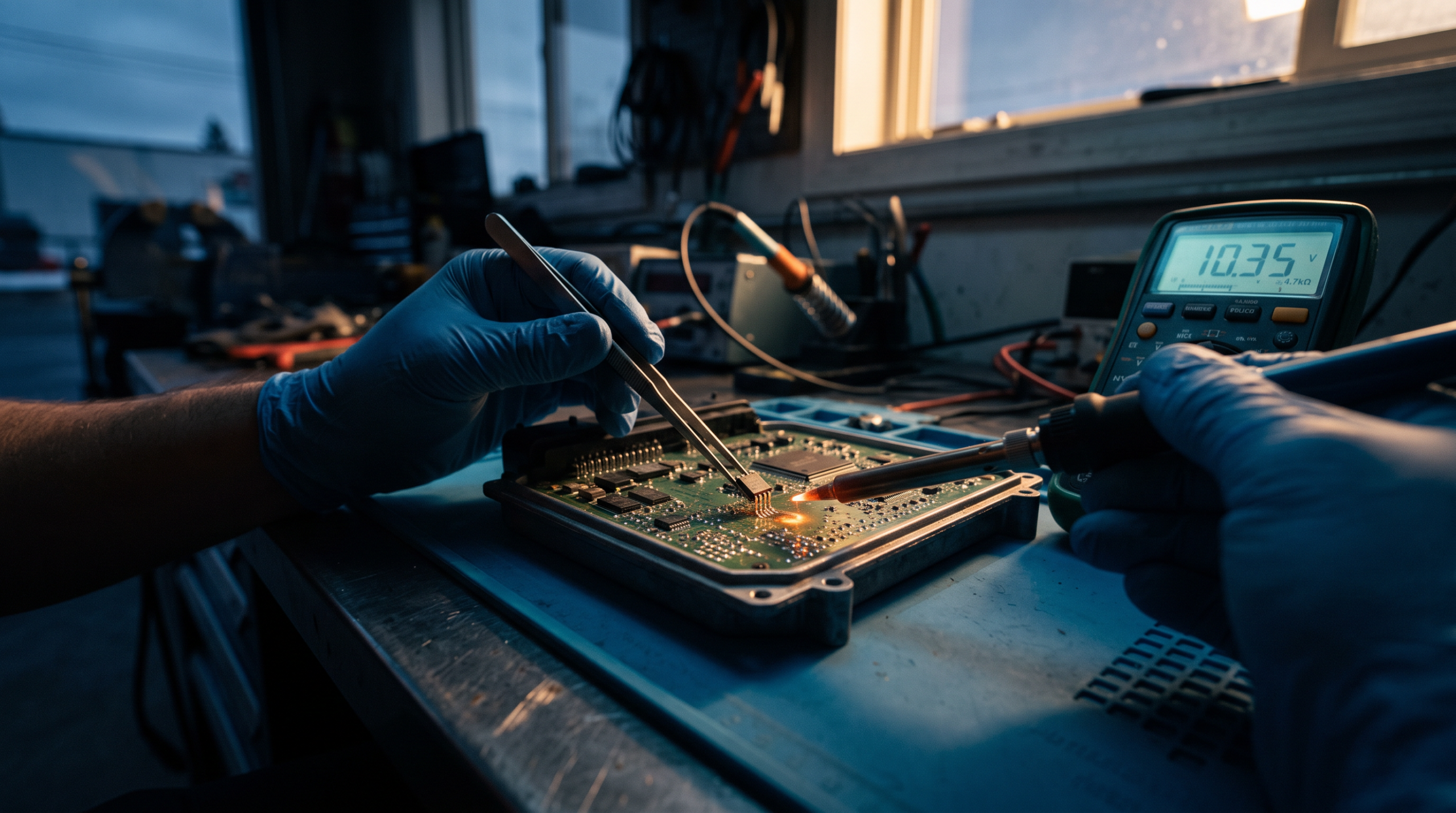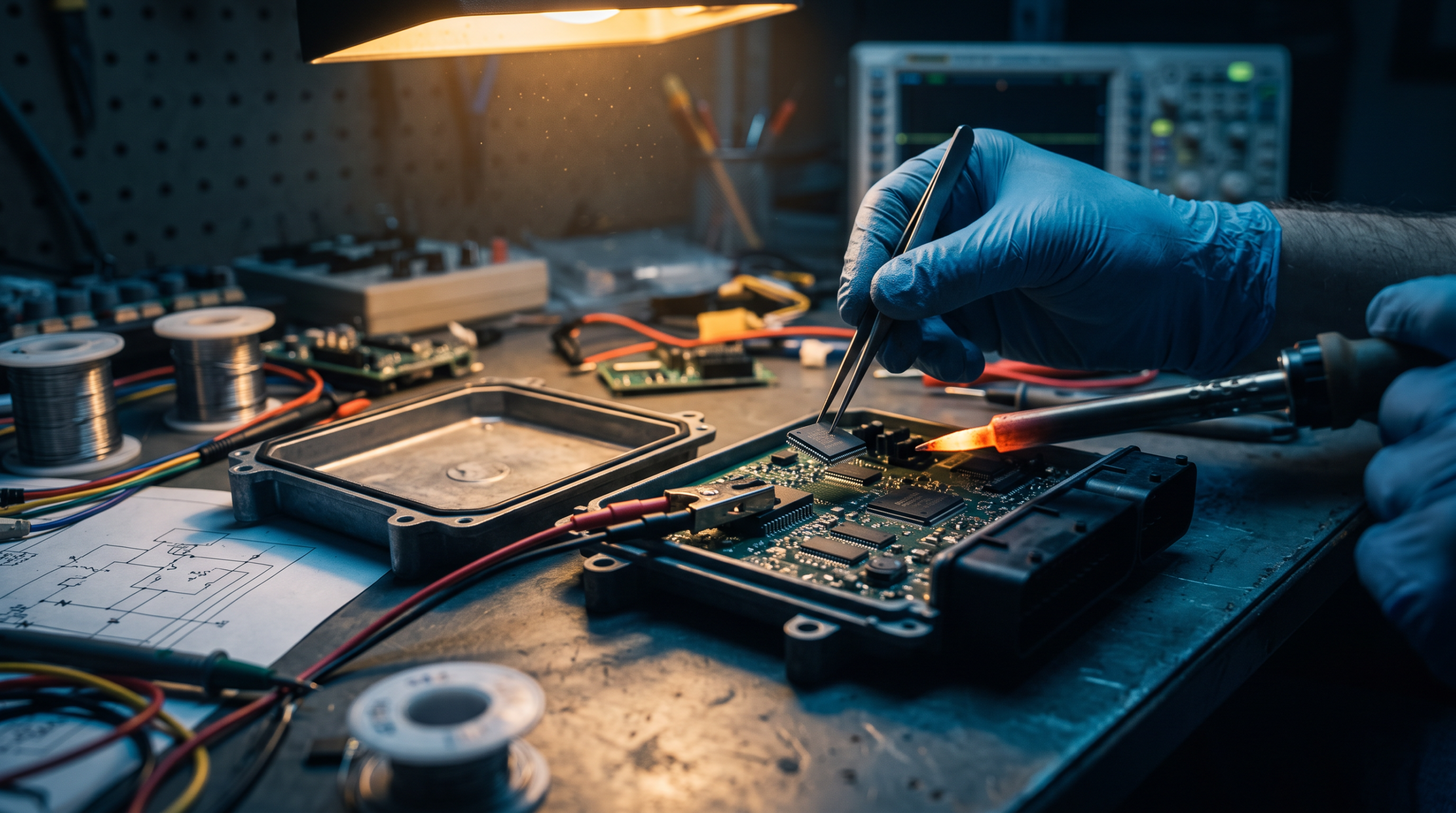
An ECU cloning service copies the complete data image from your original engine controller onto a matching donor unit, so the replacement starts and runs exactly like the module it replaced. Same VIN, same immobilizer marriage, same coding and adaptation values. When an ECU is water damaged, killed by a shorted injector driver, or bricked after a failed flash, cloning is usually faster and cheaper than buying a virgin module and programming it from scratch. The catch is simple. Cloning is clean on some VAG platforms and awkward on others, and the deciding factor is almost always immobilizer security and component protection. This is where an experienced ecu cloning service earns its keep, because copying the bytes is easy and making the car accept them is the real work.
What an ECU Cloning Service Actually Does
Cloning is not a single click. A real ecu cloning service reads two separate memory areas from the original ECU and rebuilds them on the donor. The flash memory holds the program and the maps. The EEPROM holds the immobilizer data, the component security value, the VIN, and the learned adaptations. Our ECU cloning and data transfer process reads both areas, then writes them to a donor that carries the same hardware and software number.
The donor match matters more than people expect. For a Bosch MED17.5 petrol controller or an EDC17 diesel, we look for the same part number family and ideally the same or a compatible software version. A mismatched donor can be reflashed to the correct software, but the hardware revision has to be capable of running it. Get the match right and the clone boots as if nothing changed.
Reading the data is platform dependent. Older controllers talk over the K-line on OBD pin 7. Newer ones use CAN on pins 6 and 14. Many locked MED17 and EDC17 units will not surrender the full flash and EEPROM over OBD at all, so we read them in boot mode or on the bench with a BDM or boot connection. That bench work is exactly why a specialist ecu cloning service exists.
ECU Cloning vs a Virgin or Blank Module
Cloning is one route. The other is fitting a virgin ECU, a factory-blank module that has never been married to a car, and programming it online so it adapts to your vehicle fresh. Each has a place.
When a Used Donor and Cloning Make Sense
Choose cloning when you can source a matching donor and the platform stores its immobilizer data locally. On a 1.8T with Bosch ME7, a PD diesel with EDC16, or many PQ35 and PQ46 cars, the EEPROM carries the full immobilizer picture. Clone it to a same-number donor and the engine starts without ever touching the cluster or the keys. No online session, no dealer, no re-coding. For these cars an ecu cloning service is the fastest fix on the table, often a same-day turnaround.
When a Virgin or Blank ECU Wins
A virgin ECU is the better path when you cannot find a clean donor, when the original EEPROM is unreadable, or when the platform uses component protection that a raw clone would trip. A blank module programmed online with the manufacturer factory tooling, the same GeKo-gated systems Audi and its sister brands use, adapts to the car properly and registers itself correctly. This is standard ECU programming and coding services work. It costs more in labor and needs online access, but it is the clean, factory-correct result. On the newest MQB and MLB cars it is frequently the only path that ends in a running vehicle.
Immobilizer Data Is the Hard Part of Any ECU Cloning Service
The engine will not run if the immobilizer says no. Every VAG ECU stores a component security value and a login that must agree with the cluster and the key transponder. When we clone the EEPROM from the original, that immobilizer data comes with it, which is why a clean clone starts instantly on older platforms. This is also why an ecu cloning service is far more than a file copy. Read the EEPROM wrong, or clone a donor whose immo data has already been altered, and you get a no-start with a flashing immobilizer light.
If the immobilizer data is gone because the original chip is dead, we can often recover the component security value from the cluster or from a full backup, then write it into the donor. That crossover into key and immobilizer programming is common on cloning jobs and is worth confirming before any module is opened.
Platforms Where ECU Cloning Is Straightforward
Not all VAG cars are equal here. The older the immobilizer generation, the easier the clone.
- Bosch ME7 petrol (1.8T and 2.0, immo 3 and immo 4 era): EEPROM immobilizer, no component protection. A same-number donor clone runs immediately.
- EDC15 and EDC16 diesel (PD engines such as ASZ and BKD): local immobilizer data, clone-friendly, widely supported.
- Simos and Med9.1 on the EA113 2.0 TFSI: readable and cloneable with correct immobilizer handling.
- Many PQ35 and PQ46 cars up to roughly the early 2010s: immo 4 with the data held in the ECU and no component protection to fight.
On these platforms an ecu cloning service is genuinely straightforward. Match the donor, transfer the flash and EEPROM, verify the coding, and the car drives away.
Where Component Protection Complicates ECU Cloning
MQB and MLB made cloning harder. On the Golf 7 platform, the Audi A3 8V, the A4 B9, the A6 C7 and C8, and the Q7 4M, many control units including some ECUs sit behind component protection, known internally as Komponentenschutz. A cloned ECU carrying a donor identity can boot but then drop into limp mode or refuse to start, because the car sees a module whose identity is not registered in its component protection list. On these cars a straight clone is not enough on its own.
Two clean outcomes exist. Fit a virgin ECU and program it online so it registers correctly, or clone the donor and then clear the mismatch through component protection removal. Which one we recommend depends on the exact car, the software level, and whether a matching donor is even available. This is the single most common reason a DIY clone fails on a modern Audi or Volkswagen, so plan for it before you buy a used module.
What a Clean Clone Needs From You
The best results come from a few basics. Provide the original ECU or a verified full backup of its flash and EEPROM. Supply a donor that matches the hardware and software number, not just the same engine. Confirm the VIN and how many keys the car has, because immobilizer recovery depends on it. If the original is physically destroyed, say so early, because recovering the component security value from the cluster changes the plan. Get these right and an ecu cloning service becomes a predictable, verifiable job rather than a gamble.
Remote vs In-Person ECU Cloning Service Work
Honesty matters here. Some of this is remote and some is not. If your original ECU still powers up and communicates, we can often guide a workshop through reading the flash and EEPROM over OBD, then supply the rebuilt file for the donor. That is the core of our remote VAG programming service, and it works well on older clone-friendly platforms.
When the ECU is dead, locked, or read-protected, the module has to come out for bench or boot-mode reading. A drowned or fire-damaged controller cannot be cloned over OBD, because there is nothing left to talk to. In those cases the physical unit reaches a bench, gets read at the chip level, and the data is transferred to the donor by hand. Component protection registration on MQB and MLB also usually needs the car present or a live online session. We tell you up front which category your car falls into.
Getting an ECU Cloning Service Done Right
Start with the platform. If your Audi, Volkswagen, or Porsche runs an older Bosch ME7, EDC16, or a PQ-era controller, cloning to a matching donor is the fast, clean fix, and an ecu cloning service can often turn it around the same day. If it is a newer MQB or MLB car with component protection, plan for either a virgin module programmed online or a clone paired with proper registration. Either way, confirm the donor part number, protect the original immobilizer data, and verify the result with a tool like Ross-Tech VCDS before the car leaves. A specialist ecu cloning service handles all of that, so you get a controller that starts, runs, and holds its adaptations instead of a paperweight with the right part number. If you are not sure which route your car needs, send us the VIN and the symptom, and we will point you at the shortest path to a running engine.
Is Your VAG Vehicle Showing This Issue?
Whether you are a car owner dealing with a fault, a workshop needing a specialist partner, or an enthusiast looking to unlock your vehicle’s full potential, VAG Programming offers expert remote and in-person ECU coding, programming, and diagnostics for Audi, Volkswagen, Porsche, Bentley, and Lamborghini worldwide.
Contact us today and let’s fix it the right way.