If your Audi’s engine ECU has died, or you are fitting a used unit pulled from a donor car, you cannot just bolt it in and turn the key. An audi ecu clone and transfer copies the immobilizer and adaptation data your car expects into the replacement module, so the engine cranks and starts, the immobilizer stays satisfied, and no new fault codes appear on the scan. Done properly the swap is invisible. Done badly you get a no-start, a flashing immobilizer light, or component protection errors that lock the car down until the data is corrected.
This is the specialist end of ECU work, and it is different from a normal flash. A clean audi ecu clone and transfer means the replacement ECU carries the same secret keys, the same VIN, and the same coding your car had before the failure. Below is how the job actually runs, when a used ECU is the right call, and the platforms where the work is straightforward versus the ones where component protection turns a 30-minute bench job into an online coding session. If you would rather hand the whole thing to a specialist, our ECU programming and coding services cover both new and used units.
What Audi ECU Clone and Transfer Actually Means
There are two routes, and they solve different problems. The first is a true clone: your original ECU is still readable, so we dump its full flash and EEPROM and write that data into a matching replacement unit. The replacement becomes a copy of the original, so the instrument cluster, immobilizer, and any component protection still see the ECU they were paired with. Nothing needs re-adapting because, as far as the car is concerned, nothing changed.
The second route is a transfer. Your original is dead or unreadable, so we take a used donor ECU and write your car’s immobilizer data, VIN, and coding into it. The donor’s own identity is overwritten with yours. This is the more common ECU cloning and data transfer scenario, and it is where the platform and the immobilizer generation decide how hard the job is.
Either way, the data lives in small memory chips on the board: serial EEPROMs like the 95040, 95080, and 95160 family, plus the main microcontroller flash. On older Bosch units the microcontroller is an ST10 or a first-generation Tricore. On MED17 and EDC17 it is a later Infineon Tricore that usually has to be read in boot or bench mode, off the car.
When a Used ECU Makes Sense (and When It Doesn’t)
A used ECU is the sensible choice when the original has a hardware fault, water damage, or a blown output stage that cannot be repaired economically, and when a brand new unit from Audi is either discontinued or priced past what the car is worth. The catch is matching. The donor has to share the same hardware part number and, ideally, the same software index. An 03L 906 018 unit is not automatically interchangeable with an 03L 906 022 just because both came out of a 2.0 TDI. Mixed hardware means the flash you clone will not run correctly, and you invite drivability faults that are painful to chase later.
When the donor matches, an audi ecu clone and transfer is genuinely the cheapest reliable fix. When it does not, a virgin unit is often the better spend, which is covered further down.
The EEPROM Dump and Rebuild Behind Every Audi ECU Clone and Transfer
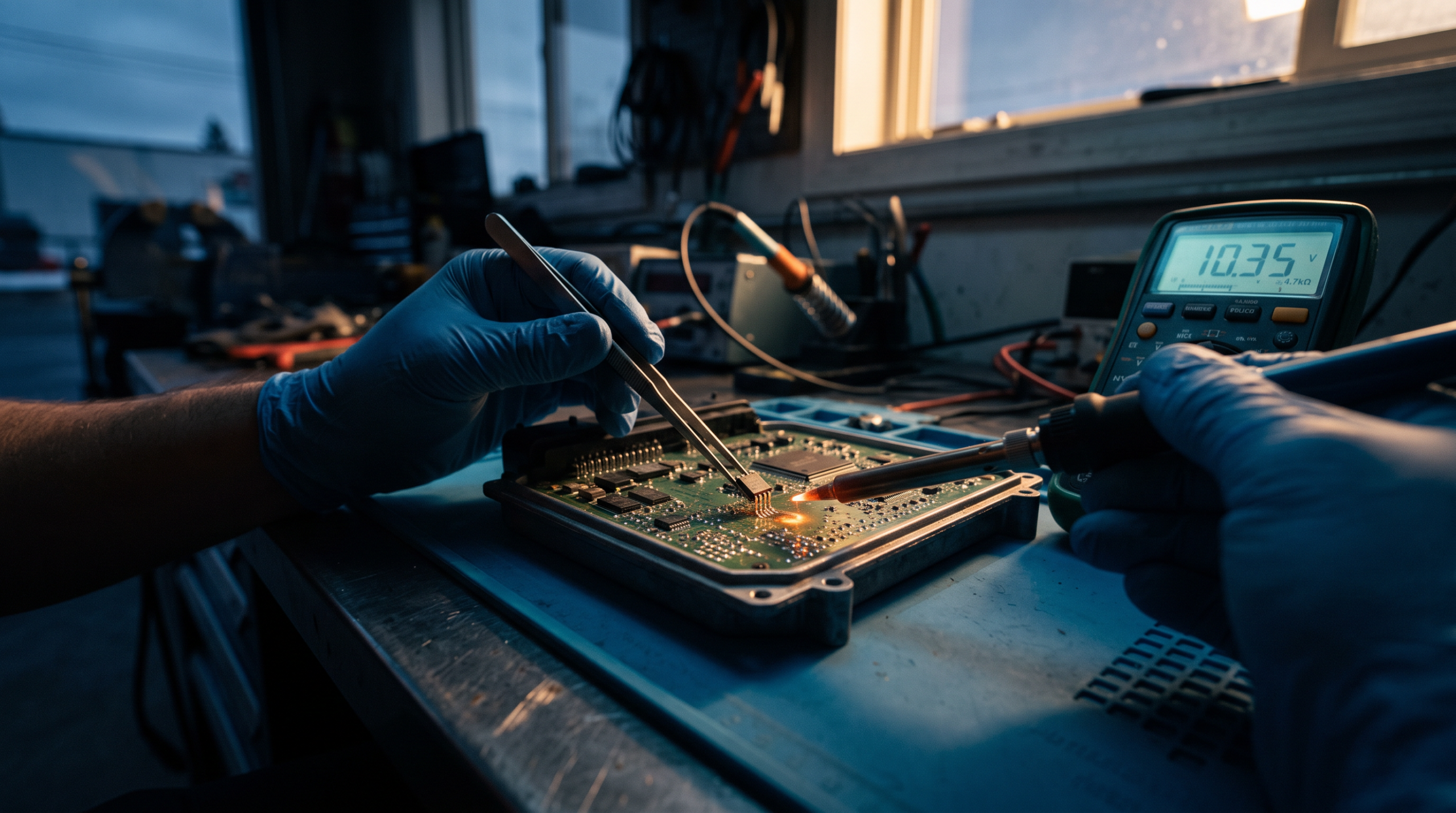
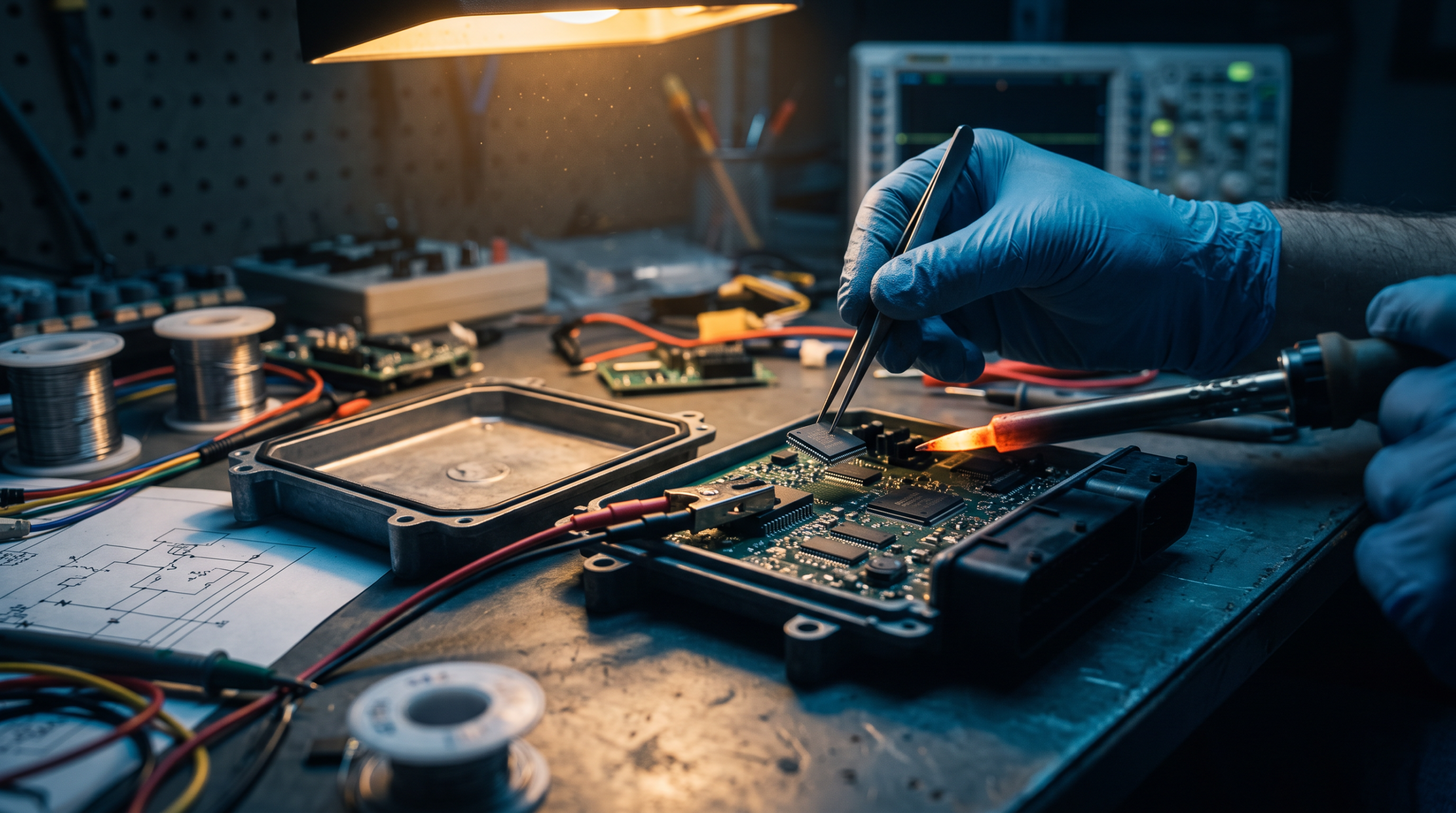
Every clean audi ecu clone and transfer starts with a good dump. We open the ECU, identify the EEPROM and flash chips, and read them with a bench tool or through boot mode rather than trusting an OBD read that can time out halfway. From that dump we pull the immobilizer’s secret key, the SKC or PIN on older cars and the component security bytes on newer ones, which is what the immobilizer uses to trust the ECU. We also read the VIN, the immobilizer alignment bytes, and the coding.
The rebuild writes that data into the replacement. On a straight clone the whole EEPROM and flash go across untouched. On a transfer we merge your car’s immobilizer data into the donor’s dump, correct the VIN, recalculate the checksums so the ECU accepts the edited block, and write it back. Get the checksum wrong and the ECU will either refuse to boot or throw an internal fault. This is careful, chip-level work, and it is why a rushed job fails.
Immobilizer Data Is the Heart of the Job
The immobilizer is where most swaps live or die. Older Audis run IMMO4 or an earlier immobilizer generation, where the ECU stores a matching key and pairs to the cluster over the K-line or CAN. Move that data correctly and the car starts. MQB cars from roughly 2013 onward use a newer immobilizer that ties the ECU, gateway, cluster, and keys together with component protection, and that raises the bar considerably. If keys or the cluster are also involved, the job overlaps with full key and immobilizer programming rather than a simple ECU copy.
Platforms Where an Audi ECU Clone and Transfer Is Straightforward
On the older PQ platform cars, roughly pre-2013, an audi ecu clone and transfer is usually a bench job with no online step. Think EDC16 and early EDC17 diesels, or ME7 and MED9 petrol units in cars like the B7 A4, C6 A6, and 8P A3. The immobilizer is offline, the key lives in the EEPROM, and once the data is transferred and the checksums are right the engine starts on the first crank. No dealer server, no GeKo login, no component protection to clear. These are the jobs that can often be turned around the same day.
Diagnostics still matter here. We confirm the swap with a full scan in VCDS, the widely documented Ross-Tech tool at ross-tech.com, checking that no immobilizer, CAN, or adaptation faults remain before the car goes back to the owner.
Where Component Protection Complicates an Audi ECU Clone and Transfer
MQB and MLBevo cars are the harder case. Here an audi ecu clone and transfer runs into component protection, Audi’s Komponentenschutz, which binds control modules to the specific car through Audi’s online servers. A used donor ECU arrives carrying the donor car’s component protection, and until that is cleared the module will log protection faults and may not run at all. Clearing it properly needs an online SVM adaptation with GeKo-level access, or the protection has to be removed at the data level first. Our component protection removal service exists for exactly this, because most independent shops cannot reach the Audi servers a normal dealer adaptation relies on. Newer Porsche models on the MSB platform behave the same way, with their own component protection layer over the engine and transmission controllers.
Blank vs Virgin ECU: Why We Sometimes Start Fresh
A virgin or blank ECU is a new unit that has never been adapted to any car. It carries no immobilizer lock and no donor component protection, so it can be written with your car’s data and adapted cleanly. On a component-protected platform a virgin unit is often the better path than a used donor, because you skip the fight of stripping the previous car’s protection. The tradeoff is cost and the need for an online adaptation to bring it fully into the car. When a matching donor is cheap and the platform is offline, cloning wins. When the platform enforces component protection online, a virgin unit written and adapted correctly is frequently the cleaner result.
Remote or In Person?
Be honest about what each method can do. The chip-level read and write in an audi ecu clone and transfer needs the physical ECU on a bench, so the unit is either brought in or posted to us. Once the data is prepared, plenty of the follow-up coding and adaptation can be handled remotely through a laptop and a pass-through interface at your location, which is how our remote VAG programming service supports workshops that do not want to ship anything. Component protection and online SVM steps also run remotely, provided the car has a stable connection during the session. Only the initial bench dump truly needs hands on the module.
Getting Your Audi ECU Clone and Transfer Done Right
An audi ecu clone and transfer is not a plug-and-play swap, and the difference between a car that starts on the first turn and one that sits dead in the bay comes down to matching the part number, moving the immobilizer data cleanly, and knowing whether the platform will demand an online component protection step. Get those right and the replacement ECU behaves exactly like the one it replaced. If you are sourcing genuine parts or checking a part number, Audi’s own site at audi.com is the reference point, and from there the data work is what we do. Send us the ECU details and the VIN, and we will tell you up front whether your car is a straightforward bench clone or a job that needs the online step, so there are no surprises once the module is in hand.
Is Your VAG Vehicle Showing This Issue?
Whether you are a car owner dealing with a fault, a workshop needing a specialist partner, or an enthusiast looking to unlock your vehicle’s full potential, VAG Programming offers expert remote and in-person ECU coding, programming, and diagnostics for Audi, Volkswagen, Porsche, Bentley, and Lamborghini worldwide.
Contact us today and let’s fix it the right way.