
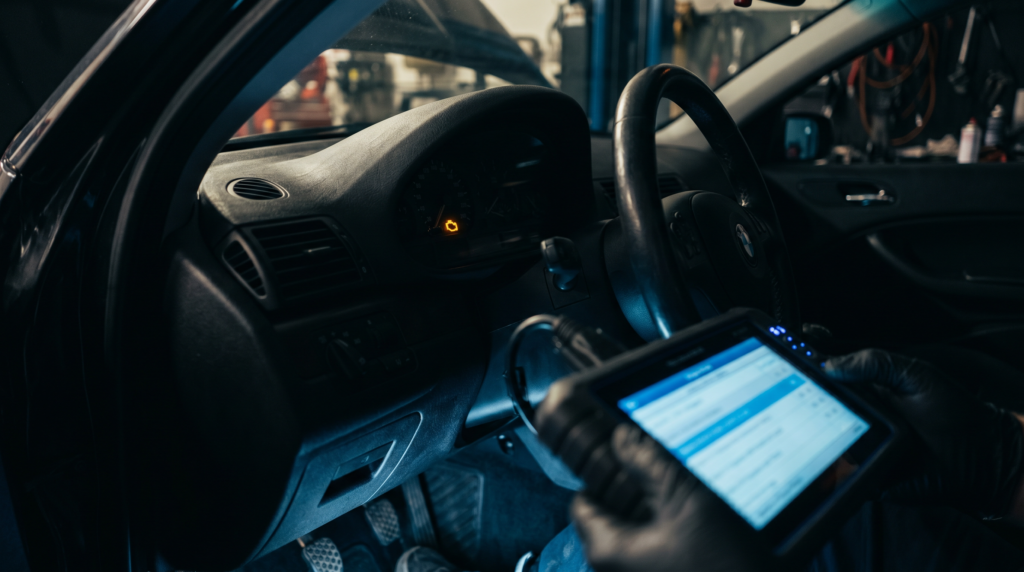
If your Audi or Volkswagen has thrown a P0171 code, the engine computer is telling you one thing: it is trying to add fuel because the mixture is running too lean, and it has run out of room to compensate. On VAG engines this almost always points to unmetered air sneaking into the intake after the mass airflow sensor, a tired PCV valve, or a fuel delivery problem. A proper P0171 system too lean Audi Volkswagen fix is not about clearing the code and hoping it stays gone. It is about finding where that extra air gets in, or why the fuel side is falling short, then correcting it and resetting the adaptations so the engine relearns from a clean baseline.
This guide covers what the code means, what causes it on the EA888 2.0T, the 1.4 and 1.5 TSI (EA211), and the older 2.0 FSI engines, what you feel from the driver’s seat, and how a technician actually pins down the repair. Whether you are an owner staring at a check engine light or a workshop tech chasing a stubborn lean trim, the same logic applies.
What P0171 System Too Lean Means on Your Audi or Volkswagen
Your engine targets an air to fuel ratio of about 14.7:1. To hold that target the ECU constantly trims fuel up or down based on the oxygen sensor signal. Those corrections are the fuel trims: short term fuel trim (STFT) reacts second to second, and long term fuel trim (LTFT) is the learned average baked into memory. When the mixture leans out, the ECU adds fuel and the trims swing positive. Once the combined correction climbs past roughly 25% and the computer still cannot reach target, it logs P0171, System Too Lean, Bank 1.
On a four cylinder TSI there is only one bank, so P0171 shows up by itself. On a VR6, V6, or V8 the second bank has its own code, P0174, and the two together tell you whether the cause is shared, like fuel pressure or a common intake leak, or limited to one side, like a single failed gasket. Reading those trims is the heart of any P0171 system too lean Audi Volkswagen fix, because the numbers reveal whether the fault lives at idle or only shows up under load.
What Causes the P0171 System Too Lean Fault on VAG Engines
By a wide margin the leading cause on modern VAG engines is unmetered air, air that enters the intake without being counted by the MAF sensor or the manifold pressure model. The usual suspects:
- PCV valve failure. On the EA888 2.0T the crankcase breather is built into the valve cover. The diaphragm tears with age and heat and opens a large vacuum leak straight into the intake. This is the single most common trigger for P0171 on the 2.0T, and VAG has a dedicated code, P052E, for PCV regulator performance.
- Cracked breather and intake hoses. The corrugated PCV hoses and the turbo inlet boot go brittle and split, especially on Gen1 and Gen2 EA888 engines from the Mk5 and Mk6 era.
- Intake manifold gasket leaks on the 1.8T and early 2.0 FSI, sometimes from a warped flange.
- MAF sensor reading low. A contaminated or failing mass airflow sensor under reports incoming air, so the ECU under fuels and the mixture goes lean. More common on older MAF based cars than on newer speed density setups.
- Weak fuel delivery. A failing low pressure lift pump, a tired high pressure pump (HPFP) on FSI and TSI direct injection, a clogged filter, or dirty injectors all starve the engine, usually worst under load.
- Boost and charge pipe leaks on turbo cars, which let metered air escape after the turbo and throw off the fuel calculation.
Getting the P0171 system too lean Audi Volkswagen fix right depends on telling these apart. A vacuum leak is worst at idle, when manifold vacuum is high, so trims are large at idle and shrink as revs rise. A fuel supply problem is the mirror image: trims look fine at idle and blow out under heavy load when demand peaks. That one distinction saves hours of parts swapping.
Symptoms You Will Actually Notice
Plenty of cars set this code with no drama beyond the warning light. When symptoms do show, they are usually:
- A steady check engine light, not flashing. A flashing light means active misfire, so stop driving.
- Rough or hunting idle, sometimes a faint hiss from a vacuum leak
- Slight hesitation or a flat spot on light throttle
- Harder cold starts
- A small drop in fuel economy
- Occasional misfires, which drag P0300 to P0304 along with them
None of these are alarming on their own, which is exactly why lean codes get ignored until they pair with a misfire. Leaving it alone is a mistake. A lean mixture burns hotter and over time can damage catalytic converters and pistons.
How the P0171 System Too Lean Audi Volkswagen Fix Is Done
A clean diagnosis follows a set order, and a good P0171 system too lean Audi Volkswagen fix never skips steps:
- Read live fuel trims first. Plug in VCDS or ODIS and watch STFT and LTFT at idle and at about 2500 rpm under load. The pattern points you toward vacuum or fuel before you pick up a wrench.
- Smoke test the intake. Pressurize the intake with a smoke machine and watch for leaks at the PCV, the valve cover seam, the intake boot, and the manifold gasket. This finds the majority of lean faults on VAG engines in minutes.
- Check the PCV and breather. On the 2.0T, pull the oil filler cap at idle. Heavy suction, or a cap that will not lift off easily, can flag a failed regulator. Replace the valve cover or PCV as needed.
- Verify fuel pressure. Confirm low side pressure, around 4 to 6 bar, and on direct injection check high side rail pressure on the scan tool, which can run from 50 to 150 bar. A weak HPFP drops rail pressure under load.
- Clean or test the MAF and inspect for an exhaust leak ahead of the front oxygen sensor, which can pull in fresh air and skew the reading.
- Repair, then reset adaptations. After the fix, reset the long term fuel trim adaptation channels and re run readiness so the ECU relearns from zero.
That last step matters more than people expect. If you replace a torn PCV but leave a +20% learned trim in memory, the car runs rich until it slowly relearns. Resetting adaptations with a proper tool is part of every complete P0171 system too lean Audi Volkswagen fix. For the deeper electronic side of the job, our vehicle diagnostics and troubleshooting service handles live data capture, guided fault finding, and adaptation resets across the VAG range.
Reading Fuel Trims the Right Way
The numbers do the talking. As a rough guide, LTFT inside about 10% either way is healthy, past 10% positive is a flag, and beyond 25% positive is what trips P0171. Ross-Tech’s VCDS documentation explains how to log these measuring blocks, and it is worth learning to read them yourself. If trims are sky high at idle but settle as the revs climb, hunt for a vacuum leak. If they are fine at idle and climb under boost, look at fuel supply or a charge pipe leak.
Related Codes That Show Up Alongside P0171
P0171 rarely travels alone, and the company it keeps tells you where to look:
- P0174, System Too Lean Bank 2 on six and eight cylinder engines, pointing at a shared cause
- P052E, PCV regulator performance, close to a smoking gun on the 2.0T
- P0507, idle speed higher than expected, a classic vacuum leak signature
- P2279, intake air system leak
- P0299, turbo underboost, often a boost or charge pipe leak
- P0300 to P0304, misfires brought on by the lean mixture
Seeing P0171 together with P052E and P0507 is almost a signed confession from a failed PCV, and that cluster makes the P0171 system too lean Audi Volkswagen fix straightforward. Other times a known software issue or an out of date ECU calibration changes how the engine models airflow, which is where proper ECU programming and coding services come in to flash the latest calibration or correct coding after a part swap.
Lean Codes on Porsche, Bentley, and Lamborghini
Lean faults are not just an economy car problem. A Porsche, Bentley, or Lamborghini built on VAG architecture can set the same P0171 logic, but the parts, the access, and the software are far more complex, and the cost of guessing is steep. These are rare cars, and few independent shops carry the tooling or the experience to diagnose them properly. VAG Programming is one of a small number of independent specialists worldwide that work on them. If you are facing a lean fault on one of these, remote diagnosis with live data and guided functions is usually the smartest first move.
Remote or In Person: Getting It Sorted
Much of the work behind a P0171 system too lean Audi Volkswagen fix is software based: reading trims, running output tests, resetting adaptations, and checking for the latest ECU calibration. All of that can be done remotely. Our remote VAG programming service connects to your car through a pass-through interface, so we capture live data, guide your local mechanic straight to the leak, and handle the adaptation reset or coding once the part is in. The mechanical repair, swapping a PCV or a split hose, happens locally. The brains of the job we can handle from anywhere.
If you prefer hands-on service, in person diagnosis covers the full job from smoke test to road test. Audi’s own owner and service information is a fine reference for maintenance intervals, but a lean code needs a scan tool and a smoke machine, not a manual.
The Bottom Line
P0171 on an Audi or VW is a solvable, well understood fault. Nine times out of ten it is unmetered air, and on the EA888 2.0T that means a PCV valve. Read the trims, smoke test the intake, confirm fuel pressure, fix the leak, then reset the adaptations. A complete P0171 system too lean Audi Volkswagen fix ends with healthy trims sitting near zero and a clean readiness scan, not just a light that went out. Work it in that order and you will not be chasing the same code again next month.
Whether you want a second opinion on a diagnosis, the latest calibration flashed, or a specialist to guide your local shop, the P0171 system too lean Audi Volkswagen fix is squarely in our wheelhouse.
Is Your VAG Vehicle Showing This Issue?
Whether you are a car owner dealing with a fault, a workshop needing a specialist partner, or an enthusiast looking to unlock your vehicle’s full potential, VAG Programming offers expert remote and in-person ECU coding, programming, and diagnostics for Audi, Volkswagen, Porsche, Bentley, and Lamborghini worldwide.
Contact us today and let’s fix it the right way.