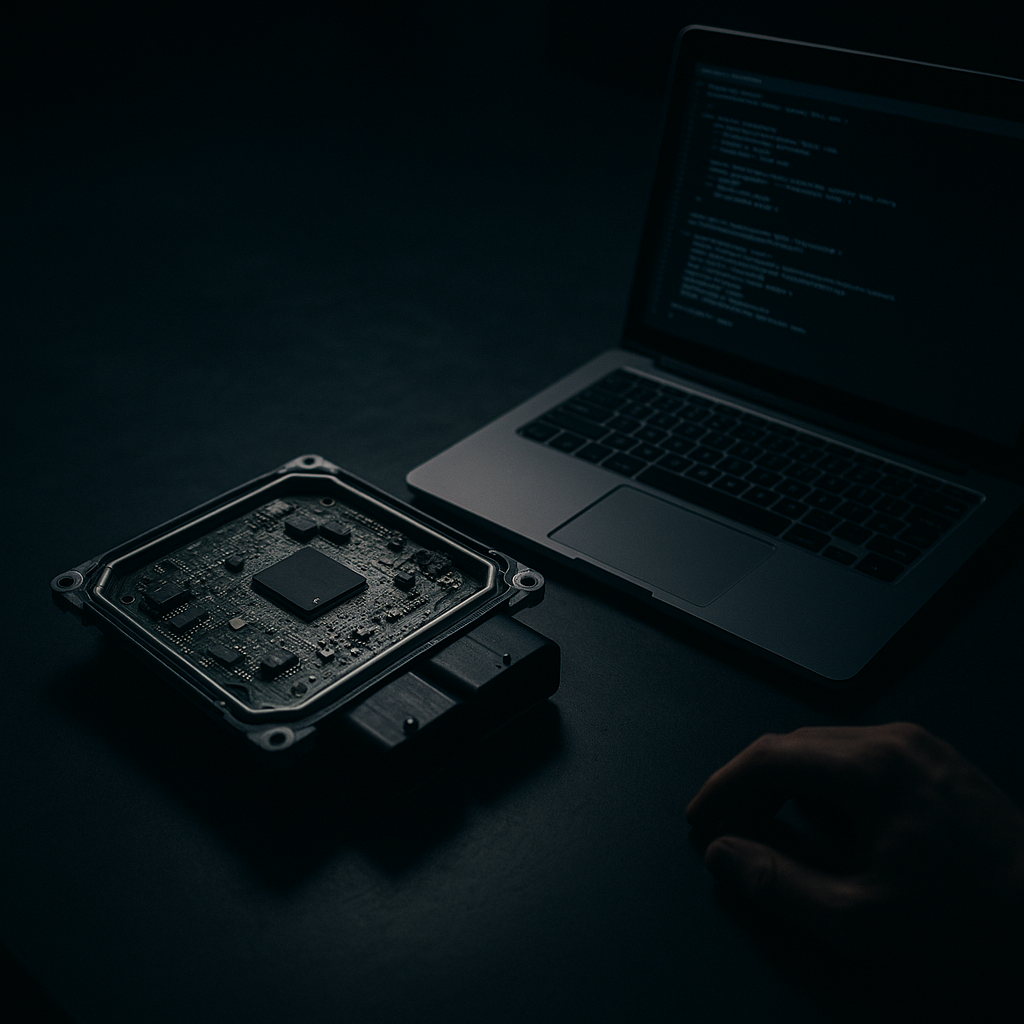
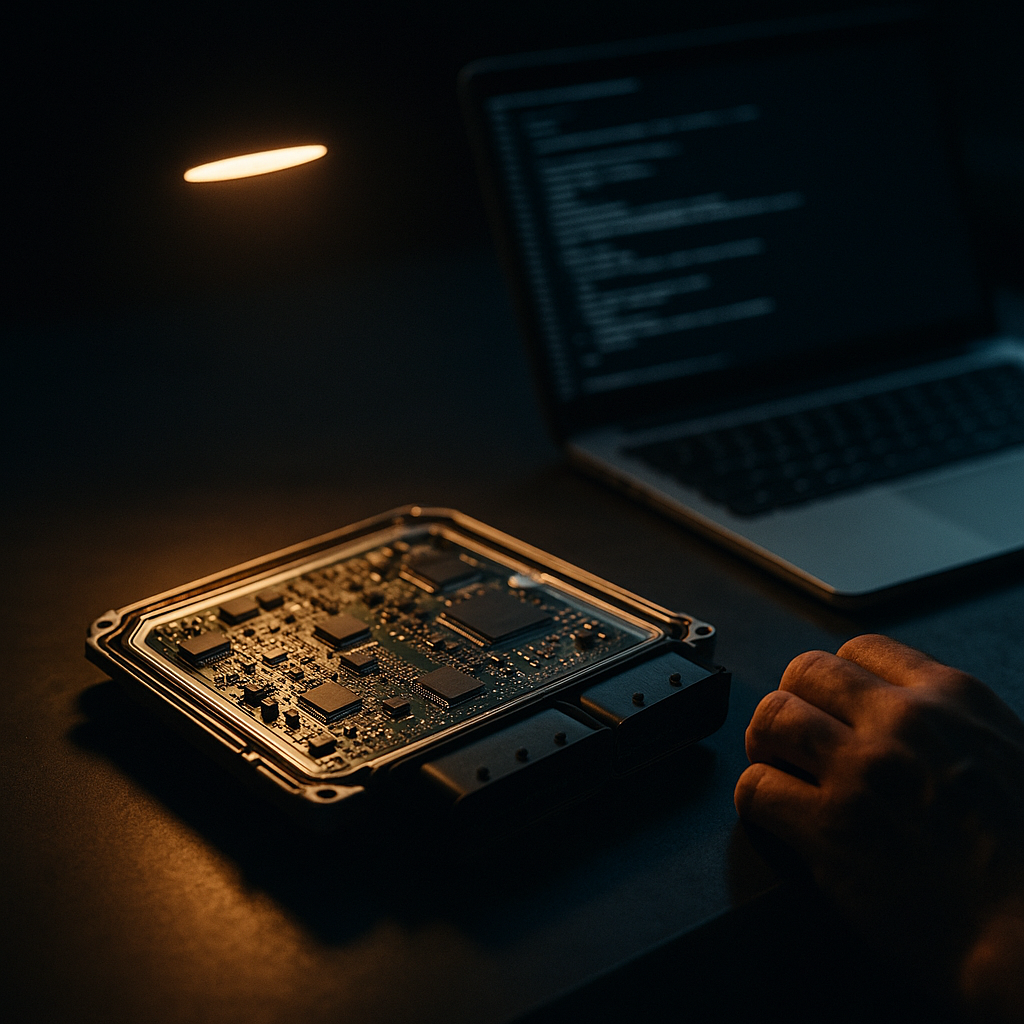
If you’ve been searching for what is ecu programming for cars explained, here’s the short answer: ECU programming is the process of writing the correct software, configuration, and security data to your vehicle’s engine control unit so the car runs properly and all systems communicate as designed. It’s essential when replacing a faulty ECU, installing a used ECU, updating software to fix drivability issues, or enabling factory options after a repair or retrofit.
what is ecu programming for cars explained: the short version
Your ECU (Engine Control Unit) is the brain that controls fueling, ignition timing, boost management, emissions systems, and dozens of diagnostics functions. “Programming” means loading the right firmware (calibration and software) into that ECU, plus applying coding and adaptations so the ECU matches your exact car: engine code, gearbox type, immobilizer, power class, region, and installed options. Done correctly, the engine starts, runs optimally, and talks to the rest of the car without warning lights. Done incorrectly, you can end up with a no-start, immobilizer lockout, component protection active, or engine damage.
At VAG Programming, we perform this work daily on Audi, Volkswagen, Porsche, Bentley, and Lamborghini platforms using OEM-level tools and procedures. If you need help now, explore our ECU programming and coding services.
Deep dive: what is ecu programming for cars explained for VAG platforms
Within the Volkswagen Auto Group, ECUs differ by generation and supplier (Bosch MED/ME/EDC, Simos, Continental/Siemens, Marelli, MG1/MD1, etc.). Modern cars use UDS/ISO-14229 protocols and secure bootloaders, with immobilizer and sometimes component protection tied to the vehicle’s gateway. Programming aligns all of that so the software, security, and configuration match your car’s VIN and installed hardware.
Programming vs coding vs adaptation vs cloning
- Programming (flashing): Writing the ECU’s core firmware and calibration. This is the actual software the ECU executes.
- Coding: Setting options based on your car’s equipment (manual/automatic, start/stop, emissions region, cruise control, etc.). Coding lives in configuration bytes/long coding.
- Adaptation: Teaching the ECU baseline values after install or service (throttle body alignment, injector quantity learning, immobilizer alignment, power class, sensor calibrations).
- Cloning: Copying immobilizer, MAC, CS (component security), VIN, and sometimes full flash from an original ECU to a donor unit to make it “plug-and-play.”
In practice, a proper job often includes all three: flash the right software, apply exact coding, then perform guided adaptations. For workshop techs familiar with tools like Ross-Tech VCDS or ODIS, these distinctions are crucial when you plan the workflow.
Common VAG ECUs and what changes with programming
- Bosch ME/MED17, Simos 18, MG1/MD1 (gasoline): Programming sets ignition, fuel, emissions logic; coding aligns options like cylinder deactivation or start/stop; adaptations include immobilizer and throttle reset.
- Bosch EDC17/MD1 (diesel): Programming updates pilot injection, boost, EGR, and SCR logic; adaptations include injector classification and DPF parameters.
- TCUs (e.g., DL501, DQ250, DQ381): Although not the “ECU,” transmission programming/coding often accompanies engine ECU work to sync torque data and shift logic.
Manufacturers also release updated software to fix known issues—cold start roughness, hesitations, sensor plausibility checks, or MIL triggers. Applying the correct update via OEM procedures can resolve symptoms that parts swapping never fixed. For brand background and technical philosophy on control systems, see the official sites for Audi and Volkswagen.
When do you need it? — what is ecu programming for cars explained in real scenarios
- Replacing a failed ECU: A new or reman ECU must be programmed, coded, and paired with the immobilizer before the engine will start.
- Installing a used ECU: The donor ECU carries another car’s VIN, immobilizer data, and coding. You’ll need immobilizer adaptation or ECU cloning; some models also trigger component protection in other modules.
- After engine or sensor replacement: New injectors, throttle bodies, MAF/MAP sensors, turbo actuators, or a new engine harness often require adaptations and sometimes software updates to run correctly.
- Solving drivability complaints: Stalling, misfires, odd idle, or limp mode after updates or repairs may be fixed with software calibration updates and proper adaptations.
- Retrofits: Adding features (cruise control, different turbo, flex-fuel hardware) can require coding or updated software to enable OEM logic for those parts.
In all these cases, having what is ecu programming for cars explained from a VAG perspective helps you choose the right path: program fresh, clone security data, or adapt a used unit correctly.
How the process works step by step
1) Identify, backup, and baseline
- Full system scan and auto-scan log with OEM-level tooling (ODIS, VCDS, or equivalent) to document installed modules, coding, and fault memory.
- Read existing ECU info: software part number, software version, VIN, immobilizer status, power class, and coding string.
- Backup available data from the original ECU when possible (flash, eeprom, immobilizer blocks).
2) Choose the correct software and method
- Confirm the exact SW part number and calibration that matches the VIN and engine code.
- Decide on OBD programming vs. bench/boot (for locked or dead ECUs).
- Ensure checksum correction and secure flashing procedures are used to avoid bricking the ECU.
3) Program, code, and adapt
- Flash the ECU with the approved software.
- Apply correct coding to match transmission, emission market, and fitted options.
- Perform guided functions: throttle body alignment, injector/rail adaptations, immobilizer/keys learning, and if applicable, component protection handling.
4) Validate and road test
- Clear faults, perform readiness checks, and review live data for plausibility.
- Road test under varied load conditions to confirm no new faults or drivability issues.
- Provide final logs and documentation to the owner or workshop.
Remote options — what is ecu programming for cars explained without a workshop visit
Much of this work can be performed remotely. Using a secure connection, a Windows laptop, and an approved OBD interface, our technician connects to your car and carries out programming, coding, and adaptations live while you watch. See our remote VAG programming service for how the connection works and what’s required on your end.
Remote ECU programming is ideal for car owners who can’t travel and for workshops that want VAG expertise on tap. It’s fast, cost-effective, and ensures the right decisions are made in real time—especially helpful on complex VAG platforms with immobilizer and power class intricacies.
Risks of getting it wrong and how we mitigate them
Because this topic gets searched as what is ecu programming for cars explained so often, it’s important to stress what can go wrong when the process is mishandled:
- Immobilizer lockout: If the ECU VIN, CS/MAC, or power class are incorrect, the car won’t start. On later MQB/MLB platforms, keys and immobilizer must be aligned precisely.
- Component protection active: Some Audi/Porsche/Bentley modules will limit functionality if CP isn’t released properly via authorized procedures.
- Bricked ECU: Power loss or incorrect checksum handling during a flash can corrupt the ECU. We use stabilized power supplies and validated flashing sequences to avoid this.
- Wrong coding or adaptations: Mis-coded options can cause warning lights, limp mode, emissions readiness failures, or poor drivability.
- Warranty and compliance: Software must be correct for the market and emissions equipment installed to remain compliant.
We follow OEM workflows, maintain stable power during programming, back up data first, and validate live data afterward. For workshops using VCDS, we align our approach with Ross-Tech VCDS diagnostics best practices so your on-site techs stay in sync with our remote engineer.
Owner and workshop FAQs: what is ecu programming for cars explained
Is “programming” the same as “tuning”?
No. Programming ensures the ECU is on the correct factory software and coded to your car. Tuning changes calibration to increase performance. We can do both, but they’re different jobs with different risks and goals.
Can any used ECU be made to work?
Often, yes—with proper immobilizer adaptation or cloning. Some ECUs are easier to adapt than others, and certain generations require bench/boot access. When cloning is the right approach, we duplicate VIN/IMMO/CS data so the donor ECU behaves like your original. If you intend to go this route, our second-half recommendation is to review our ECU cloning and data transfer process.
Do you need the car on-site?
Not always. Many cases can be completed remotely via our secure session with a compatible interface and a stable power supply on the vehicle. In-person service is recommended for dead ECUs that require bench/boot operations or when physical inspection is wise.
Will programming fix a mechanical issue?
No. Programming won’t repair a failing fuel pump, clogged DPF, misfiring coil, or boost leak. However, updated software and correct adaptations can resolve software-related faults that look like hardware issues. If in doubt, start with solid diagnostics and live data analysis.
Real-world examples that make it clear
- Used MED17 on a 2.0 TFSI: Donor ECU arrives from another car. We clone immobilizer, align power class, and code options (manual vs. DSG). The engine starts, no immobilizer light, and readiness completes after a drive cycle.
- EDC17 diesel with DPF issues: Vehicle shows recurring DPF warnings after a sensor replacement. We update software to latest factory level and perform differential pressure sensor calibration and learned values reset. The car completes regen correctly.
- MQB platform retrofit: Owner adds factory cruise control stalk. We code the ECU and gateway, perform basic settings, and validate function via live data. Feature works as if factory-installed.
If you’re evaluating this topic as what is ecu programming for cars explained, the key is that the job spans software, coding, and security—getting all three right is what delivers a seamless, factory-correct result.
Tools and standards we align with
- OEM-level software and approved J2534/PassThru or VAS interfaces.
- Stable power supplies to protect modules during flashing.
- Full pre/post scans with detailed logs so there’s a record of what changed.
- Guided functions for adaptations and immobilizer/CP handling per platform.
Whether you’re a workshop with VCDS experience or a first-time car owner needing help, having what is ecu programming for cars explained in this structured way ensures expectations are clear and the outcome is predictable.
Related services for a complete solution
ECU work often overlaps with adjacent tasks. If you’re replacing a module with a used unit, consider our ECU cloning and data transfer so all immobilizer and configuration data is carried over. If you’re adding or enabling features after programming, many can be handled through remote VAG programming service sessions as well. For direct programming and activation on new/used ECUs, head back to our ECU programming and coding services description, and if you need broader help, explore our full range of VAG services at any time.
Conclusion: what ecu programming is and how it helps your car
To wrap up: what is ecu programming for cars explained means putting the right software and configuration into your engine computer so it starts, runs, and communicates exactly as the factory intended. It’s required after ECU replacement, strongly recommended when software updates address drivability or emissions faults, and essential for integrating used parts or retrofits. Done by specialists who understand VAG security, coding, and adaptations, it protects your investment, saves time, and restores factory function with confidence.
If you’re a car owner needing a fix or a workshop looking for a reliable partner, we can help remotely in most cases and in person when hands-on work is required. This guide to what is ecu programming for cars explained should give you a clear path forward—reach out and we’ll take it from here.
Is Your VAG Vehicle Showing This Issue?
Whether you are a car owner dealing with a fault, a workshop
needing a specialist partner, or an enthusiast looking to unlock
your vehicle’s full potential — VAG Programming offers expert remote
and in-person ECU coding, programming, and diagnostics for Audi,
Volkswagen, Porsche, Bentley, and Lamborghini worldwide.
Contact us today
and let’s fix it the right way.