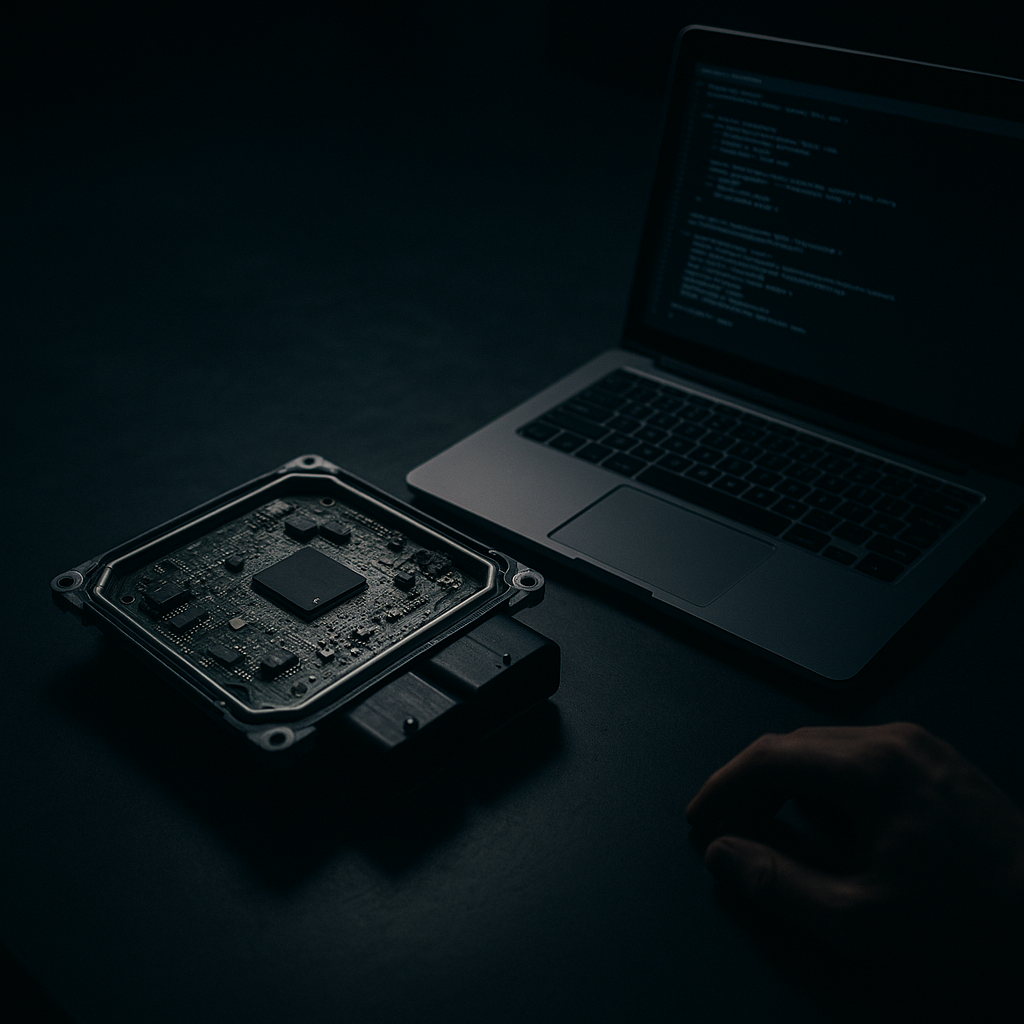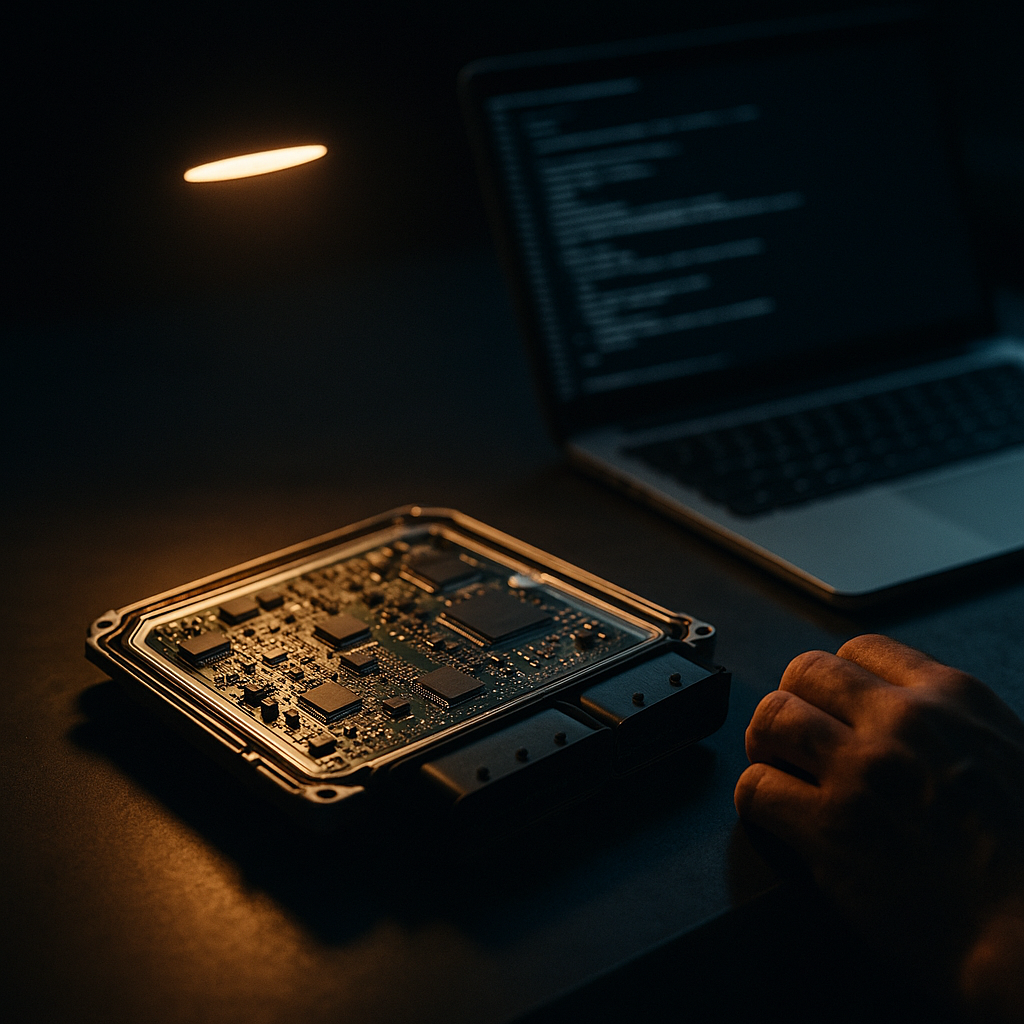
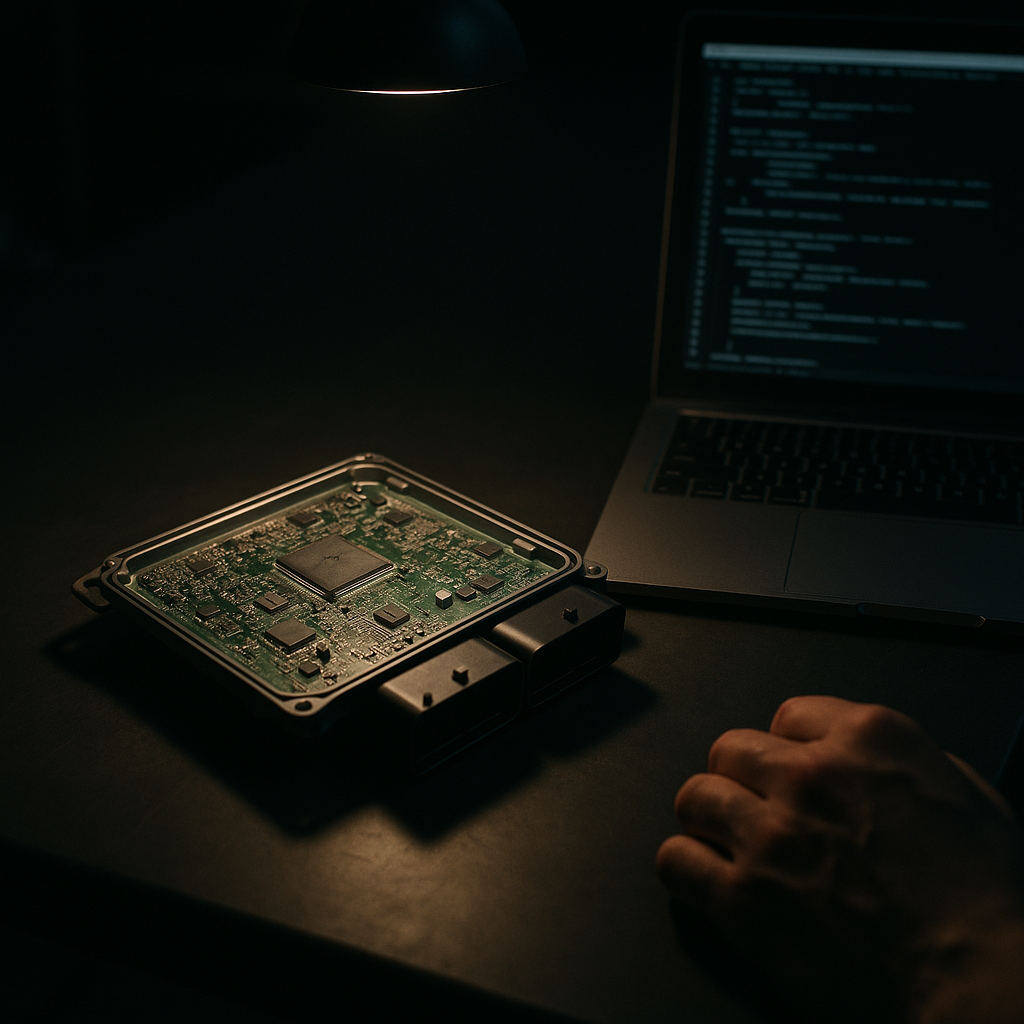
If you’re searching for what is ecu programming for cars explained in clear, plain English, this guide delivers. In short, ECU programming is the process of writing the correct software, firmware, parameters, and coding to the electronic control units that run your car — the engine ECU, transmission TCU, and dozens of other modules. It’s essential when replacing a faulty unit, fitting a used part, resolving drivability issues, or unlocking factory features. For VAG platforms (Audi, Volkswagen, Porsche, Bentley, Lamborghini), getting this right requires brand-specific knowledge, secure procedures, and the right tools. If you already know you need help, view our ECU programming and coding services.
What Is ECU Programming for Cars Explained — The Short Version
Here’s what is ecu programming for cars explained without jargon: every control unit in your vehicle runs software, and that software needs to match your car’s exact hardware, specifications, options, and security. Programming applies the correct data to a new or existing ECU/TCU; coding aligns the module with your car’s equipment list; adaptations and basic settings “teach” the module to work with sensors, actuators, and immobilizer. When done properly, your car starts, runs, shifts, and behaves exactly as it should — no warning lights, no immobilizer lockouts, no hidden faults.
How It Helps Your Car — What Is ECU Programming for Cars Explained in Benefits
When people ask for what is ecu programming for cars explained, they usually want to know the real-world benefits. These are the most important:
- Restores functionality after a failure: If your ECU/TCU or a related module has died or been water-damaged, correct programming brings the replacement to life and ties it securely to your vehicle.
- Enables used parts to work: Many used ECUs and modules won’t work plug-and-play. Properly transferring immobilizer data, coding, and parameters makes them function like factory units.
- Fixes misconfiguration issues: Incorrect coding or outdated firmware can cause rough idle, poor shifts, DPF/AdBlue issues, or random warning lights. Correct programming and coding often resolve these.
- Activates retrofits and options: Factory hardware for features like lane assist, traffic sign recognition, or ambient lighting may need coding or parameterization to work correctly.
- Improves efficiency and drivability: On stock vehicles, applying the right software updates can smooth shifts, refine throttle response, and iron out bugs.
Manufacturers routinely release software and parameter updates. You can explore official brand resources to understand the breadth of modern software-driven features and updates on platforms like Volkswagen and Audi.
VAG specifics: what is ecu programming for cars explained for Audi, VW, Porsche, Bentley, Lamborghini
Across VAG, engine control is primarily Bosch MED/ME/EDC and MG1/MD1 generations (e.g., MED17, EDC17, MG1CS, MD1CP). Transmissions include DL501 S tronic (Audi), DQ250/DQ381/DQ500 DSG (VW/Audi), and the ZF8HP in many Audi/Bentley/Porsche applications. Porsche also uses specialist ECUs for chassis, AWD, and PDCC; Bentley and Lamborghini feature high-integration networks where component protection and model-specific parameter sets are critical.
On newer platforms protected by SFD (Schutz Fahrzeug Diagnose), certain coding and parameterizations require authenticated sessions. That’s why a generic OBD scanner isn’t enough — you need VAG-specific tooling and procedures to complete programming, coding, and adaptations without bricking modules or tripping the immobilizer.
When You Need It: What Is ECU Programming for Cars Explained in Real Scenarios
Often, when owners and workshops look up what is ecu programming for cars explained, they’re facing one of these situations:
- New or used ECU replacement: The original ECU failed. A new unit must be matched to your VIN, immobilizer, and configuration. A used ECU typically requires immobilizer data transfer and coding to your vehicle specification.
- Water damage or short-circuit event: Flooding or battery reverse-polarity can destroy a module’s flash memory. Programming can restore a functional replacement.
- Software bugs or outdated firmware: The vehicle exhibits odd behavior (start/stop glitches, DPF/NOx system faults, rough shifts) that are resolved by applying the correct software and parameters.
- Retrofits and feature activations: You’ve added hardware (e.g., camera, radar, virtual cockpit) that now needs coding, parameterization, and calibrations to work.
- Workshop escalations: A local shop replaced a module, but the car won’t start due to immobilizer lockout, or the new part refuses to communicate. Proper programming fixes the root cause.
In all of these, the process goes beyond “flashing a file.” It’s an end-to-end job that includes security access, VIN/IMMO matching, coding, and guided basic settings.
The Process: Step-by-Step So You Know What Happens
In practical terms, what is ecu programming for cars explained comes down to several careful steps that protect your car and ensure success:
- Initial assessment and pre-scan: We perform a VAG-specific scan (ODIS/VCDS-level) to read fault codes, module IDs, software versions, and current coding. This establishes a baseline and flags related issues that could derail programming.
- Secure backups: We back up existing coding, adaptations, and — where possible — EEPROM and flash contents. This reduces risk and allows safe recovery if something interrupts the process.
- Programming path selection: Depending on ECU family (MED17/EDC17/MG1/MD1), we choose OBD, bench, or boot-mode. On many modern units, bench programming is safest, especially with locked ECUs.
- Write correct software/firmware: We apply the exact software that matches your hardware index and vehicle configuration, with checksums and signatures validated by professional tooling.
- Immobilizer alignment: We transfer or adapt immobilizer data (CS/PIN/MAC where applicable) so the engine starts and anti-theft systems remain intact.
- Coding and parameterization: We code the module to the car’s PR-codes (equipment list) and load parameters (e.g., gearbox or AWD characteristics) so all subsystems communicate properly.
- Adaptations and basic settings: Throttle body alignment, DSG clutch adaptations, sensor calibrations, and other guided basic settings ensure correct operation.
- Verification and post-scan: We clear residual faults, road test where possible, and provide a report of work completed and versions applied.
Much of this can be completed through our remote VAG programming service, which connects your car to a live VAG Programming technician via a secure OBD interface and remote desktop session. You don’t need to travel for many ECU and coding jobs.
Risks If It’s Done Wrong (And How We Prevent Them)
Misunderstanding what is ecu programming for cars explained can lead to costly mistakes. Common pitfalls include:
- Bricking a module: Interrupting a flash or writing mismatched software can render the ECU/TCU unresponsive. Recovery may require bench or boot-mode and pro-grade tools.
- Immobilizer lockout: Writing a used ECU without transferring immobilizer data correctly will leave the car starting for a second and dying, or not starting at all.
- Incorrect coding/parameters: The car may crank but throw multiple DTCs, shift poorly, or disable safety systems if feature coding doesn’t match your hardware.
- SFD/security access errors: Newer VAG platforms require authenticated sessions for coding changes. Forcing changes with generic tools risks partial writes and corrupt states.
- Checksum/signature issues: Modern ECUs verify integrity. Invalid checksums or signatures cause fault modes or failed boots.
We mitigate these risks with brand-specific diagnostic practice, proper power stabilization, validated software sources, verified backups, and step-by-step procedures using VAG-native and specialist tooling. For an overview of professional diagnostic depth on VAG platforms, explore the tools from Ross-Tech VCDS, which complement factory-level workflows.
New vs Used vs Cloned ECUs
Choosing the right path depends on budget, availability, and time:
- New ECU: Cleanest route. Requires programming, immobilizer adaptation, coding, and basic settings. Typically fastest to guarantee OEM-level functionality.
- Used ECU: Cost-effective, but needs immobilizer data transfer and correct coding/parameterization. Some ECUs must be bench-programmed to extract/transfer data.
- Cloned ECU: We copy original ECU’s immobilizer and configuration data into a donor. Effective when the original ECU is failing intermittently or has partial corruption. Donor hardware must be compatible.
If you’re weighing these options, our team can advise and perform the work. Learn more about safe, structured cloning on our page for ECU cloning and data transfer.
Tools and Terms: A Quick Guide
To make what is ecu programming for cars explained useful to both owners and professionals, here’s a concise glossary:
- OBD programming: Writing software through the diagnostic port. Fast but limited on some locked ECUs.
- Bench programming: ECU removed and connected on the bench via specific pins; safer for many MG1/MD1/EDC17 units.
- Boot/BSL mode: Low-level access to the microcontroller for recovery or full data access when normal comms fail.
- Flash/EEPROM: Flash holds firmware and maps; EEPROM typically stores immobilizer and coding data.
- Coding vs adaptation: Coding sets configuration flags for installed equipment; adaptations “teach” the module baseline values or calibrate actuators/sensors.
- Basic settings: Guided procedures (e.g., DSG clutch adaptation, throttle alignment).
- SFD: Security layer on newer VAG vehicles that requires authenticated sessions for certain changes.
- Component Protection: Anti-theft link tying modules to the original vehicle; requires specialist handling if swapping modules.
Remote vs In‑Person: What Can Be Done Where?
Many customers ask for what is ecu programming for cars explained specifically in the context of remote work. Here’s the breakdown:
- Typically remote-capable: Coding changes, adaptations, guided basic settings, many immobilizer alignments, software parameter updates, and a wide range of ECU/TCU flashes on supported platforms.
- Usually in-person/bench: Bricked ECUs, locked MG1/MD1/EDC17 requiring bench/boot access, heavy water-damage scenarios, and complex component protection cases where multiple modules were replaced at once.
We’ll advise the best path after a quick consultation and pre-scan. If remote is viable, you’ll get a checklist (laptop, stable internet, OBD interface), and we’ll handle the rest live.
Owners and Workshops: How We Work With You
Whether you’re an owner restoring your daily driver or a workshop needing a VAG specialist, our process is built for clarity and repeatability:
- Clear scoping: We confirm your vehicle details, parts involved, current faults, and goals.
- Transparent plan: We explain exactly how we’ll proceed — remote or bench — and what you’ll need to prepare.
- Safe execution: Power stabilization, verified backups, step-by-step programming, coding, and adaptations.
- Proof of work: Post-scan reports, software part numbers, and versions logged for your records.
- Aftercare: Support for any settling-in adaptations or related coding needs following the repair.
If you’re also planning future upgrades, you can explore our full range of VAG services to see what’s possible beyond the initial repair.
Real Examples We Solve Daily
- Used MED17 engine ECU on an Audi: Immobilizer data transferred, long coding corrected to match PR-codes, throttle body basic settings completed — car starts and idles correctly with no MIL.
- DQ250 DSG harsh shifts after TCU swap: Correct software index flashed, coding aligned, clutch adaptation performed — smooth operation restored.
- Porsche chassis module replacement: Parameterization loaded, coding aligned to options, steering angle and ride height calibrations completed — no more suspension warnings.
- Volkswagen MQB retrofits: Camera/radar added; coding, SFD-authorized changes, and calibrations done — lane assist and traffic sign recognition active as factory.
Frequently Asked Clarifications
Does ECU programming always mean “tuning” for power?
No. Programming is a broader umbrella covering software writes, immobilizer matching, coding, and parameters. Performance calibration is a specialized subset. If you’re seeking power gains, we can help with that too, but it’s a different objective than restoring stock functionality.
Can a basic OBD scanner do the job?
Generic tools read/clear codes but lack brand-specific security, coding maps, parameter files, and guided procedures. VAG platforms need proper diagnostic suites and authenticated processes to avoid lockouts and bad writes.
Is it safe to drive with a mismatched or partially programmed ECU?
No. You risk limp mode, immobilizer lockout, emissions system faults, and potential mechanical harm in transmission-related cases. Correct it promptly.
Wrapping Up: what is ecu programming for cars explained and why it matters
Now that you’ve seen what is ecu programming for cars explained from both owner and workshop perspectives, the takeaway is simple: modern VAG vehicles rely on precise software, coding, and security alignment. Getting it right ensures your Audi, Volkswagen, Porsche, Bentley, or Lamborghini runs as intended — with the features you paid for and none of the headaches. If you need a replacement ECU set up, a used module adapted, or a tricky post-repair issue resolved, our specialists can often complete it remotely, end to end. Start with our dedicated ECU programming and coding services, and if a donor module is involved, see our page on ECU cloning and data transfer. With a methodical diagnostic approach informed by tools like Ross-Tech VCDS and manufacturer guidance from brands such as Audi, we deliver reliable results without guesswork.
Is Your VAG Vehicle Showing This Issue?
Whether you are a car owner dealing with a fault, a workshop
needing a specialist partner, or an enthusiast looking to unlock
your vehicle’s full potential — VAG Programming offers expert remote
and in-person ECU coding, programming, and diagnostics for Audi,
Volkswagen, Porsche, Bentley, and Lamborghini worldwide.
Contact us today
and let’s fix it the right way.