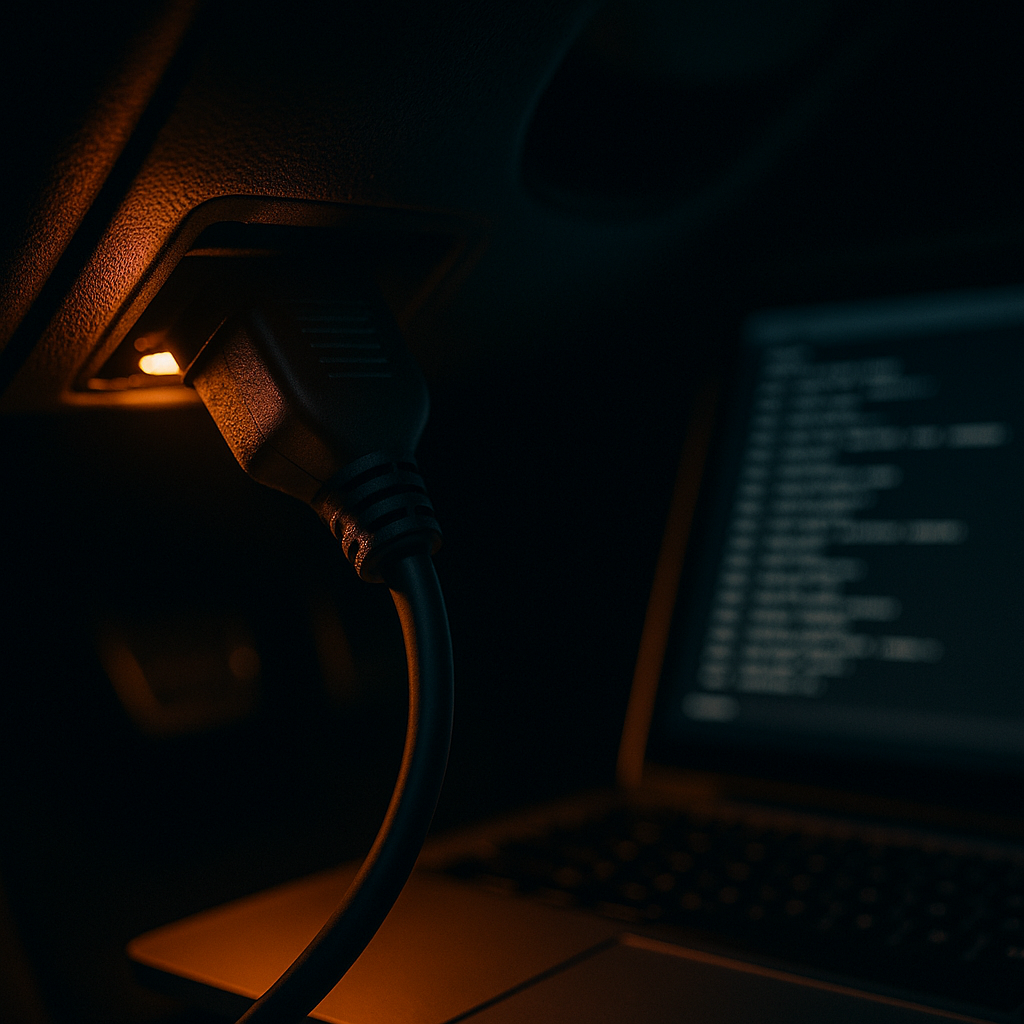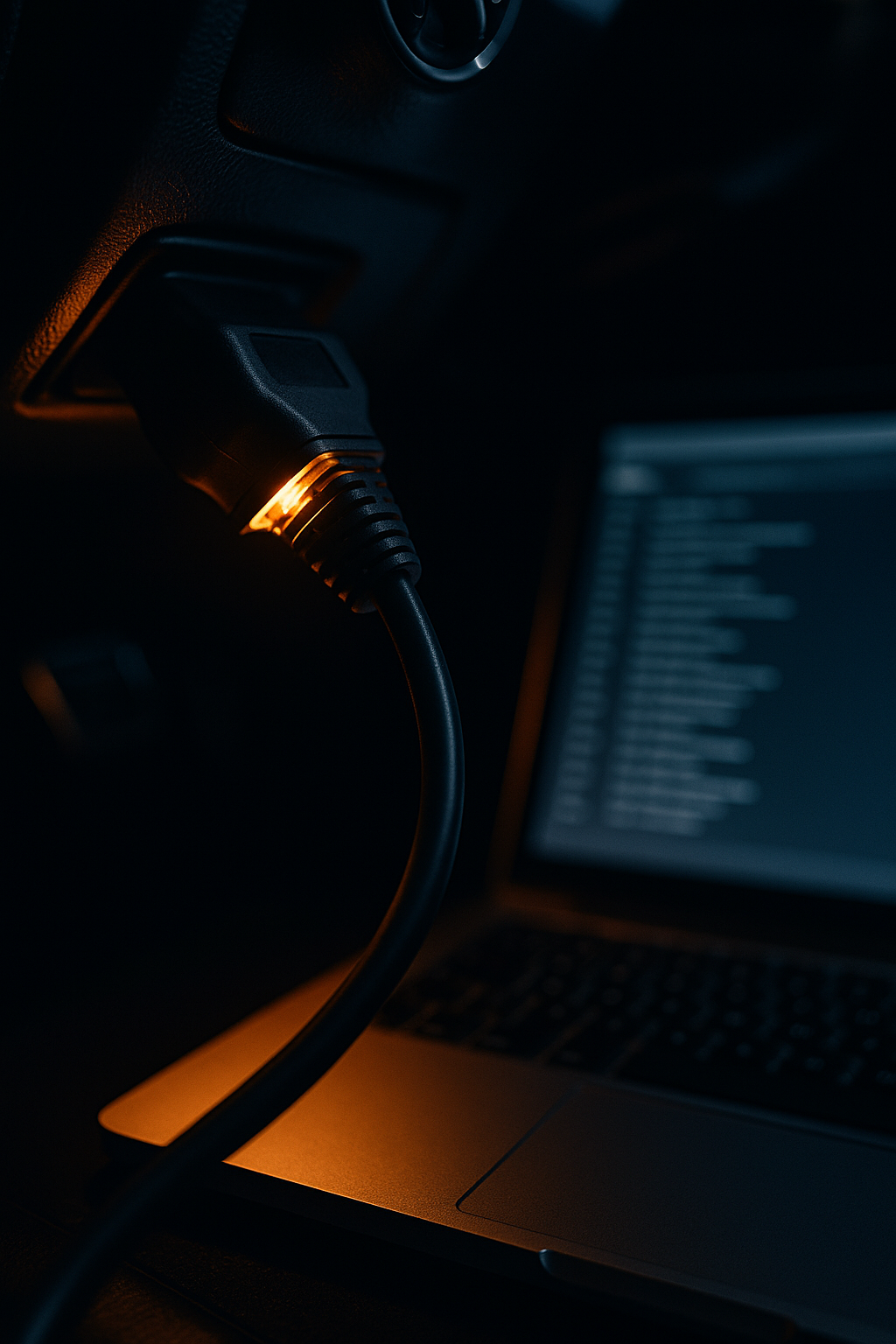
If a warning light just appeared on your dash or your Porsche is behaving oddly, the fastest way to stop guessing and start fixing is a complete porsche diagnostic scan. A proper scan reads every control module in the car — not just the engine — and pinpoints whether the issue is a simple sensor fault, a software adaptation, or a deeper mechanical problem. At VAG Programming, we perform PIWIS/ODIS-level diagnostics on Porsche platforms with the same methodical approach we use for Audi and Volkswagen, both remotely and in person.
When do you need a porsche diagnostic scan?
You need a porsche diagnostic scan any time you see a Check Engine Light (CEL), ABS/PSM warning, Airbag light, TPMS alert, charging/battery symbol, suspension warning, transmission/PDK message, or when the car enters limp mode. Modern Porsche models (718, 911, Cayenne, Macan, Panamera, Taycan) have dozens of networked control units; a quick generic OBD reader can only see a slice of the story. A full brand-specific scan:
- Reads stored, intermittent, and pending codes with freeze-frame data across all modules (DME, PDK, PSM/ABS, PASM/air suspension, PTM/AWD, PDCC, BCM, Gateway, Instrument Cluster, PCM infotainment, TPMS, SRS, etc.).
- Shows live values and counters to confirm what’s failing under real conditions.
- Runs guided functions, actuator tests, and basic settings to validate a fix — for example, throttle body adaptation, steering angle calibration, ride height calibration, PDK clutch teach-in, or EPB service mode.
If our porsche diagnostic scan indicates that a replacement module has been fitted or software synchronization is required, we can immediately assist with ECU programming and coding services so the repair is completed correctly the first time.
What a proper porsche diagnostic scan includes
Not all scans are equal. A reliable porsche diagnostic scan goes beyond reading a single P-code. Our process mirrors Porsche’s PIWIS test plan methodology and VAG ODIS practices.
1) Full control unit autoscan and fault memory
We connect to the vehicle network and perform a complete autoscan of all control units present on the car. We capture:
- All DTCs (Diagnostic Trouble Codes) with status bits (static/intermittent/sporadic) and freeze-frame snapshots.
- Network health (CAN, LIN, FlexRay/Ethernet where applicable), gateway installation lists, and communication errors (U-codes).
- Software versions, coding strings, and adaptation maps to spot mismatches after part swaps or updates.
This is essential because a low battery or poor ground can light up half the dashboard with cascading U-codes — a classic Porsche scenario. The scan lets us separate root cause from knock-on effects.
2) Live data, freeze frames, and guided test steps
Our porsche diagnostic scan leverages live data to confirm faults under the same conditions that triggered them. Examples:
- DME: misfire counters by cylinder, fuel trims, high-pressure fuel rail, O2/AFR sensor switching, boost targets vs. actual, GPF/OPF soot/ash load.
- PDK: clutch temperature and fill times, selector status, torque request/acceptance, valve actuation tests.
- PASM/air: level sensor plausibility, damper valve duty, compressor cycle times, reservoir pressure, ride height calibration values.
- PSM/ABS: wheel speed correlation, yaw/longitudinal sensors, brake pressure sensors.
- Electrical: alternator/IBS behaviors, state of charge, start-stop enable criteria.
With guided tests we can command actuators (e.g., purge valve, wastegate, radiator fans), run leak checks, and verify after-repair results without guesswork.
3) Basic settings, coding, and adaptations after a porsche diagnostic scan
Many Porsche faults aren’t “bad parts” — they’re missing adaptations after service. After the porsche diagnostic scan confirms the path forward, we handle procedures such as:
- Steering angle sensor calibration, throttle body adaptation, and exhaust flap relearns.
- PAS/air suspension ride height calibration, front axle lift setup, PDCC zeroing.
- EPB pad replacement mode on Macan/Cayenne and service interval resets.
- PDK clutch and shift adaptations after transmission or mechatronics work.
- TPMS teach-in and PCM coding following infotainment or amplifier replacement.
Porsche systems we commonly diagnose
Each platform has its own quirks. Our porsche diagnostic scan approach considers the typical issues by model and generation:
- 911 (997/991/992): intermittent misfires under load, active aero wing faults, PASM damper valve errors, steering angle/calibration issues after alignment, sport chrono and exhaust valves.
- 718 (982): DI fuel pressure sensor plausibility, EVAP leaks, GPF differential pressure out-of-range, immobilizer/key authorization after battery events.
- Cayenne (9PA/92A/9YA): air suspension compressor cycles, level sensors, transfer case control (PTM) judder or communication faults, alternator/IBS low-voltage cascades, EPB service mode.
- Macan (95B): PDK temperature/clutch fill times, boost leaks on turbo engines, ride height sensor plausibility (air), TPMS module pairing issues, gateway coding mismatches after retrofits.
- Panamera (970/971): rear-axle steering calibrations, PDCC faults, active anti-roll bar sensors, HV battery conditioning on hybrids, amplifier/fiber-optic MOST ring breaks.
- Taycan (J1): high-voltage isolation plausibility, DC-DC converter faults, thermal management valves, charging module communication — many can be pre-diagnosed remotely to plan safe HV handling.
For fundamentals of manufacturer-level diagnostics and code structures on VAG platforms, resources like the Ross-Tech Wiki offer solid background, while Porsche’s official site porsche.com is a good starting point for owner information and technical overviews.
Remote porsche diagnostic scan — how it works worldwide
A high-quality porsche diagnostic scan no longer requires travel. With our remote workflow, a trained technician connects to your car live:
- We ship or specify a compatible OBD interface and provide secure remote-access software.
- You connect a stable battery maintainer to prevent voltage drop during diagnostics.
- Our technician establishes a session, performs the autoscan, reviews fault memory, reads live data, and runs safe test functions.
- We share a report and, where applicable, carry out coding, adaptations, or service resets on the same call.
Many issues — from Check Engine and TPMS to PASM calibrations and steering angle resets — can be solved remotely. For hands-on tests (smoke test for EVAP/boost leaks, oscilloscope wiring checks, or physical repairs), we guide your workshop or schedule in-person service. Learn more about the setup on our remote VAG programming service page.
Common warning lights and what a porsche diagnostic scan reveals
- Check Engine Light (CEL): The scan differentiates between fuel trim issues (vacuum/boost leaks), misfire sources (ignition vs. fuel), oxygen/AFR sensor aging, catalytic/GPF performance, and EVAP system leaks.
- ABS/PSM: We confirm wheel speed sensor integrity, yaw/longitudinal sensor plausibility, brake pressure sensors, and network health to the PSM module.
- Airbag/SRS: We identify seat occupancy mat faults, clock spring/rotary connector issues, and resistance anomalies at squibs or connectors.
- Suspension/PASM/Air: We evaluate level sensors, reservoir pressure, compressor duty, valve block leaks, and damper valve control; then run ride height calibration where needed.
- Transmission/PDK: We read clutch temperatures, adaptation values, selector status, and solenoid performance; we can perform relearns after repairs.
- Charging/Battery: We analyze IBS data, alternator load response, state of charge, and start-stop readiness. Low voltage can cause multi-module comms faults — the scan confirms root cause.
- TPMS: We diagnose sensor ID, battery life, and RF antenna reception issues, then perform teach-in procedures after tire work or module replacement.
- PCM/Infotainment/MOST: We detect fiber-optic ring breaks and module drops (amp, tuner, CDC), then update coding to match the equipment list.
From scan to fix: what happens after the porsche diagnostic scan
A scan is only the first step; actionable interpretation is what solves the problem. Here’s our typical path to resolution:
- Initial interview: reproduction steps, recent work performed, warning behaviors.
- Full autoscan and freeze-frame review: identify credible primary faults vs. symptom codes.
- Live data validation: confirm sensor plausibility, compare target vs. actual values, evaluate counters.
- Test plans: actuator commands, smoke/pressure testing guidance, electrical checks as needed.
- Repair plan: precise parts and procedures, no guesswork.
- Adaptations/basic settings: complete relearns and calibrations after the mechanical fix.
- Final scan and road test: verify zero fault memory for the repaired system and stability under load.
If the right fix involves replacing a control unit, pairing a used module, or synchronizing immobilizer/coding, we handle the electronic side end-to-end with our ECU programming and coding services. This prevents common pitfalls like component swaps that trigger new faults due to missing adaptations or incorrect software versions.
Why choose VAG Programming for your porsche diagnostic scan
- VAG/Porsche expertise: We work daily with DME/PDK/PSM/PASM/PDCC/PTM/PCM systems across Porsche generations, including hybrid and EV platforms.
- Dealer-level approach: We follow PIWIS- and ODIS-style guided diagnostics — full autoscan, freeze frames, live data, test plans, and proper calibrations.
- Remote-first capability: Many scans, resets, codings, and adaptations are performed remotely with a secure connection and a proper charger on the car.
- Programming ready: When diagnosis reveals a control-unit issue, we complete the job with the necessary coding, adaptations, and post-repair validations.
- Clear reporting: You receive a structured report and a prioritized action list. Workshops can use our findings directly to execute the mechanical fix.
Advanced topics: coding, adaptations, and inter-module interactions
Porsche networks are interdependent. A single module with wrong coding can create a chain of errors. During and after the porsche diagnostic scan, we check coding strings and adaptation maps for coherency:
- Retrofitted hardware: Adding a camera or amplifier? We align PCM/coding to eliminate MOST ring and feature faults.
- Gateway installation list: We ensure modules present physically match the vehicle’s list to stop recurring U-codes.
- Hybrid/Taycan thermal management: Incorrect valve calibration can cascade into drive system warnings; we validate the relevant adaptations.
- PDK-DME coordination: Torque request mismatches can feel like driveline shudder; we verify both sides of the request/acceptance handshake.
For workshops, our structured process complements your mechanical expertise. If deeper help is needed, explore our vehicle diagnostics and troubleshooting support for complex cases.
What a generic code reader misses versus a true porsche diagnostic scan
Generic OBD tools typically read engine and maybe transmission P-codes. A true porsche diagnostic scan reaches dozens of brand-specific modules via CAN/LIN/Ethernet, supports UDS protocol sessions, captures freeze frames, runs actuators, and executes basic settings. It also documents software versions and coding/adaptation states critical to modern Porsche repairs. That’s why quick-clearing a light often leads to the light returning — the underlying calibration or network issue was never addressed.
Preparing your car for a successful remote porsche diagnostic scan
- Battery support: Connect a quality maintainer; many Porsche faults are voltage-sensitive.
- Stable internet: A wired or strong Wi-Fi connection near the car ensures a smooth session.
- Clear access: Have the key, know the symptoms, and ensure safe ventilation if the engine needs to run.
- Recent work list: Note any parts changed or coding already attempted; this speeds up root-cause analysis.
Results you can expect from a professional porsche diagnostic scan
Whether it’s a Cayenne air suspension warning, a Macan PDK message, a 992 CEL, or a Panamera TPMS issue, our porsche diagnostic scan yields a prioritized plan — from simple sensor or hose replacement to a required adaptation, coding change, or deeper mechanical test. You’ll know what to do next and why, with data to back the decision. For owners, that means confidence and fewer parts thrown at the problem. For workshops, it means reduced diagnostic time and comebacks.
Book your porsche diagnostic scan now
If you’re dealing with a warning light, drivability issue, or after-repair light that won’t stay off, schedule a porsche diagnostic scan with us. We can connect remotely in most cases, guide your on-site checks, and follow through with any coding or adaptations required. If needed, we’ll coordinate in-person service to complete mechanical testing and repairs. To see how far we can go without a workshop visit, read about our remote VAG programming service, and for complex or multi-system faults, our vehicle diagnostics and troubleshooting service provides end-to-end support.
For background reading on diagnostics culture and manufacturer-level tools, the Ross-Tech Wiki is an excellent VAG resource, and Porsche’s official site hosts owner and model information helpful for understanding your vehicle’s systems.
Is Your VAG Vehicle Showing This Issue?
Whether you are a car owner dealing with a fault, a workshop
needing a specialist partner, or an enthusiast looking to unlock
your vehicle’s full potential — VAG Programming offers expert remote
and in-person ECU coding, programming, and diagnostics for Audi,
Volkswagen, Porsche, Bentley, and Lamborghini worldwide.
Contact us today
and let’s fix it the right way.