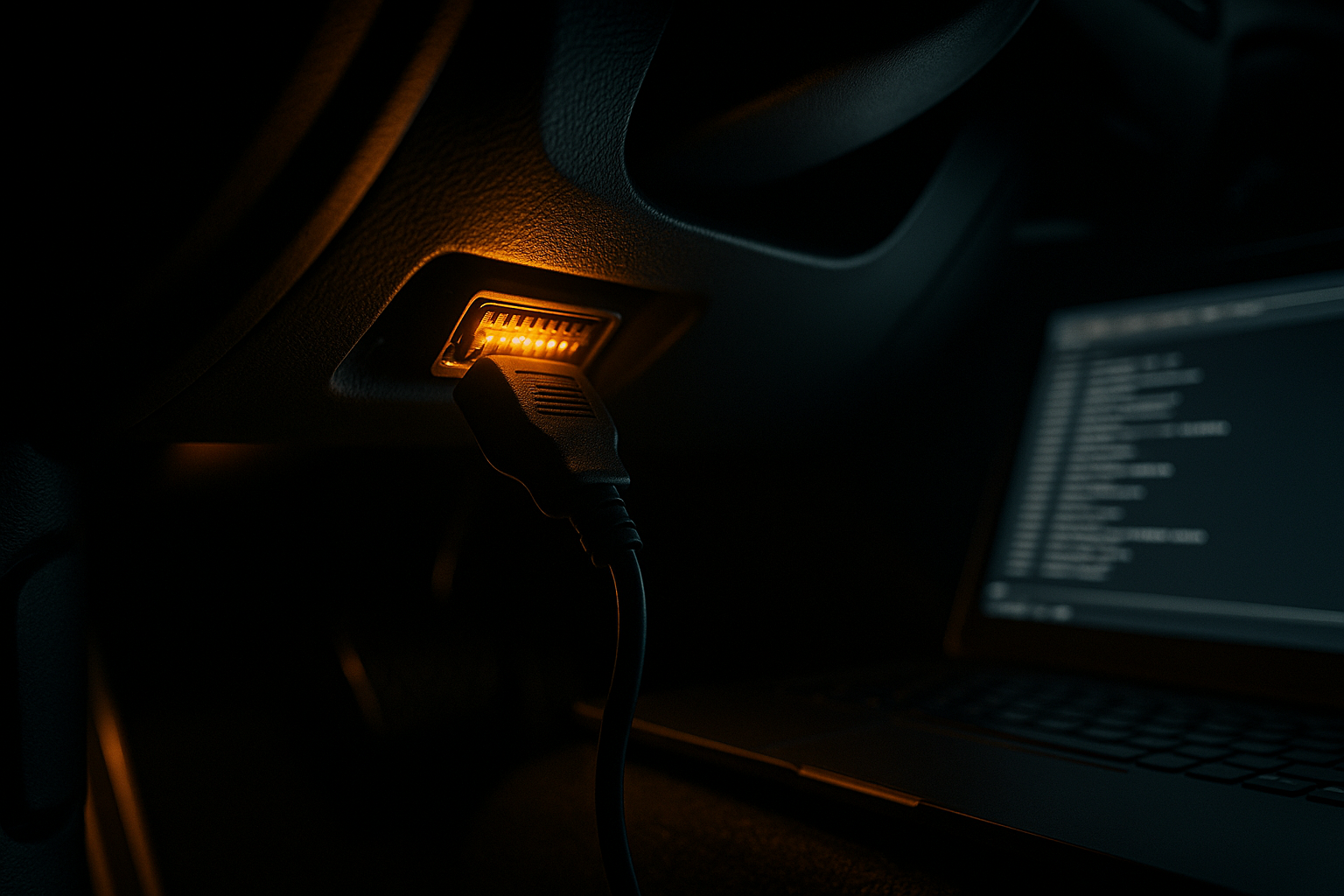
If your scan shows 18010 P1602 power supply ECU audi vw, the engine control unit has recorded a loss of its main battery feed (Terminal 30). In plain English: the ECU saw battery power drop out or dip too low, even briefly. This can be as harmless as a recent battery disconnect, or it can point to a real electrical issue such as a weak battery, bad main relay, corroded grounds, or wiring problems. Below I’ll explain what it means, the common Audi/Volkswagen causes, symptoms you may notice, how to diagnose it properly, and the right way to fix it.
What 18010 P1602 power supply ECU audi vw actually means
VAG ECUs monitor their supply voltage very closely. Code 18010/P1602 flags when the ECU’s constant power feed (called Terminal 30) is interrupted or drops below the minimum operating threshold during operation or crank.
- Terminal 30: Permanent battery voltage line feeding the ECU through fuses/relays.
- What triggers it: Battery disconnects, low battery during cranking, failed main power relay, blown ECU fuse, corroded power/ground connections, or wiring faults.
- Intermittent vs static: Often you’ll see this code stored as “Intermittent” after a jump-start, battery swap, or bench flashing. If it returns quickly after clearing, you likely have an actual supply problem.
Note: If an ECU has been replaced or recently programmed, it’s normal to see 18010 P1602 power supply ECU audi vw once. Clear it and recheck after a proper drive cycle. If you’ve installed or need to install a new or used ECU, our ECU programming and coding services ensure correct coding, immobilizer matching, and readiness setup.
Terminal 30 vs Terminal 15 — quick primer
VAG wiring diagrams use “Klemme” (Terminal) numbers:
- Terminal 30: Direct battery positive (B+) — always live, even with ignition off.
- Terminal 15: Ignition-switched power — live only with ignition on.
The ECU needs both, but 18010 P1602 power supply ECU audi vw is specifically about the always-hot feed (Terminal 30). If Terminal 15 drops, you’d see other symptoms and codes.
Symptoms you may notice with 18010 P1602 power supply ECU audi vw
- Check engine light (MIL) on, or a stored code with no current MIL.
- Longer crank time, especially after the car has sat or in cold weather.
- Rough initial idle after start, occasional stalling right after start.
- Reset clock, radio presets lost, one-touch window “pinch” function lost (signs of a recent power loss).
- Other control units logging “Under-voltage” or “Supply Relay” faults during the same event.
- On diesels or certain platforms, short-lived limp or EPC warning during a low-voltage episode.
It’s also common to see 18010 P1602 power supply ECU audi vw alongside a flurry of spurious faults after a low battery event. Clear everything, fix the underlying voltage issue, and re-scan after a proper drive.
Top causes of 18010 P1602 power supply ECU audi vw on Audi & VW
- Weak or failing battery: Aged batteries can sag below 9.6 V during crank; many ECUs will reset and log P1602. Modern vehicles are sensitive to voltage dips.
- Alternator or charging issues: Undercharge or excessive ripple can trip voltage monitoring, especially at idle with high electrical load.
- Main ECU power relay failure:
- Gasoline ME7/ME9/ME17 platforms commonly use the ECU Power Supply Relay (often referenced as J271 on many models). Intermittent contacts cause ECU resets.
- On older TDI (e.g., Mk4/ALH), the famous “Relay 109” powers the ECU; failing relays are a known cause.
- Blown/loose ECU fuses: In the plenum chamber, under-hood fuse panel, or dash end. Microcorrosion or heat can cause intermittent feed loss.
- Poor grounds: Loose or corroded body/engine grounds (G1/G2 and engine block grounds). Grounds are as critical as power; high resistance will mimic low voltage.
- Wiring/connectors: Corroded splices, water ingress in the plenum, aftermarket alarm/remote-start splice errors, or battery terminal/IBS sensor issues on newer platforms.
- Recent service events: Battery disconnect, jump-start, bench flashing, or ECU removal and refit can set a one-time 18010 P1602 power supply ECU audi vw. If it doesn’t return, it’s a historical event, not a fault.
- Battery management (newer cars): On MQB/MLB cars with intelligent battery sensors (J367), an un-coded battery replacement can cause persistent low state-of-charge behavior and repeated under-voltage events.
How to diagnose 18010 P1602 power supply ECU audi vw correctly
A proper VAG workflow prevents parts-chasing. Use VCDS/ODIS level tools for a full Auto-Scan and meaningful live data. The Ross-Tech Wiki and Ross-Tech VCDS software are gold standards for interpreting these logs.
Step-by-step diagnostic approach
- Full Auto-Scan (all modules): Save the report. Note all “Under-voltage”, “Supply voltage B+”, and “No communication” timestamps. If many modules share the same time stamp, suspect a global battery or main cable issue.
- Check freeze frame data: Look at battery voltage at the time of fault, engine speed, and mileage since fault. If the voltage was very low during crank, the battery is suspect.
- Battery health test:
- Measure resting voltage: 12.6–12.8 V is healthy; ≤12.2 V indicates low charge or aging.
- Cranking test: Voltage should generally stay above ~9.6 V. A dip below can reset the ECU and set P1602.
- Charging test: 13.8–14.7 V typical, minimal ripple. Excessive AC ripple indicates alternator diode issues.
- Visual and physical checks: Battery terminals tight and clean, main ground straps intact, no green corrosion, plenum chamber dry, ECU connector pins clean.
- Fuse and relay inspection: Verify ECU fuses for tightness and continuity. On platforms with J271/Relay 109, tap-test or substitute with a known-good relay if suspicion is high.
- Live data for “Terminal 30/15 voltage”: Watch supply voltage during ignition on, crank, and idle with loads (heated seats, blower, rear defog). Any sudden dropouts indicate a feed/wiring/relay problem.
- Voltage drop tests (key):
- Positive side: Measure from battery + to ECU feed at the fuse/relay output while cranking and with loads on. More than ~0.3–0.5 V drop suggests a problem.
- Ground side: Measure from ECU ground to battery – under the same conditions. High drop means poor grounds.
- If recent service: If you recently swapped or programmed the ECU, clear the code and verify it doesn’t return after a full drive cycle.
Quick checks you can do at home
- Inspect and tighten battery terminals; clean off corrosion.
- Check for water in the plenum area near the ECU (blocked drains are common on some platforms).
- Charge the battery fully and clear 18010 P1602 power supply ECU audi vw; see if it returns after a few days.
- If the clock and windows keep resetting, suspect ongoing power loss — time to test the battery/alternator.
Workshop-level tips that save time
- Scope the alternator for ripple under load; failing diodes trigger myriad “under-voltage” ghosts.
- Substitute the ECU power relay where practical; intermittent relays cause elusive resets.
- For MQB/MLB, verify battery coding/adaptation; incorrect BEM data can keep SOC low, inviting 18010/P1602 recurrences.
Model-specific notes for Audi/VW (and broader VAG)
- Mk4 TDI (ALH/BEW): Relay 109 is infamous. Hard starts, intermittent stalls, and 18010 P1602 power supply ECU audi vw often trace back here. Replace with the updated relay if suspect.
- 1.8T/2.7T/ME7-era engines: J271 (ECU Power Supply Relay) in the plenum can corrode or develop high resistance. Check plenum drains and relay output voltage under load.
- FSI/TSI (ME9/ME17/MED17): Low cranking voltage from weak batteries is a prime cause; battery age and cold-weather behavior matter.
- MQB/MLB platforms: Ensure proper battery registration/coding after replacement. Misreported battery type or capacity leads to chronic low SOC events and repeated P1602.
- Porsche/Bentley/Lamborghini: Vehicles that sit for long periods can log P1602 after storage or trickle charger disconnects. If the code reappears after a full charge and drive, investigate relays/grounds methodically. We support remote diagnosis for these rarer platforms.
Repairing the root cause of 18010 P1602 power supply ECU audi vw
- Battery: Replace if it fails load testing or is aged. On newer platforms, code the new battery (type, capacity, manufacturer) via diagnostics so the energy management system charges it correctly.
- Alternator/charging: Repair or replace if voltage/ripple is out of spec. Clean/secure the main B+ cable at the alternator and check for heat damage.
- Relays and fuses: Replace any suspect ECU power relay (J271/Relay 109 etc.) and high-resistance fuses. Ensure relay sockets are tight and dry.
- Grounds: Remove, clean, and re-seat key grounds. Apply proper conductive protection where specified.
- Wiring: Repair corroded splices, damaged harnesses, or poor aftermarket tap-ins. Restore OEM wiring integrity.
- ECU events: After legitimate service events (battery/ECU work), clear P1602 and verify it doesn’t return. If an ECU has been replaced or cloned, make sure immobilizer/coding is correct to avoid side-effect faults. Our ECU programming and coding services cover this end-to-end.
After repairs, clear all codes and complete a drive cycle. Many readiness monitors reset after a power loss; confirm emissions readiness if applicable.
Related codes often logged with 18010 P1602 power supply ECU audi vw
- 00532/00668: Supply Voltage B+/Terminal 30 low in various control modules.
- 01314: Engine Control Module – No Communication (during voltage drop events).
- U-codes: Lost communication codes across the CAN network when the battery dips.
- P0562: System Voltage Low (on some platforms).
- Immobilizer or cluster faults: If power loss occurs during start-up, you may briefly see immobilizer-related DTCs that clear once voltage is stable.
Preventing a comeback of 18010 P1602 power supply ECU audi vw
- Use the correct battery specification (AGM/EFB where required) and code it on newer cars.
- Keep terminals and ground points clean and tight; address plenum water ingress proactively.
- Avoid cheap add-on electronics that splice into ECU power feeds; use proper add-a-circuit methods.
- If the car sits, use a quality maintainer designed for modern battery chemistries.
Professional help: remote diagnostics and guided repair
Many cases of 18010 P1602 power supply ECU audi vw can be diagnosed remotely through an ODIS/VCDS-level session. We connect via secure software, read live data and freeze frames, and guide you or your workshop through voltage drop tests and relay checks. See how our remote VAG programming service works in practice. If deeper on-car tests are needed, we’ll outline them clearly, then verify the fix with post-repair data.
For multi-module under-voltage sprees, CAN communication anomalies, or stubborn repeat occurrences, our advanced vehicle diagnostics and troubleshooting process includes oscilloscope validation, charging system analysis, and wiring strategy specific to Audi/Volkswagen platforms. You can also review Audi’s official resources for brand information while we handle the technical heavy lifting.
If your issue stemmed from a failed ECU or a unit that was improperly flashed or swapped, we can resolve immobilizer matching, coding, and readiness through our specialist tools. Explore our full range of VAG services to see how we support owners and workshops worldwide.
Conclusion: fix 18010 P1602 power supply ECU audi vw the right way
This code means the ECU lost its constant battery feed, typically due to a weak battery, a failing power relay, corroded grounds, or wiring/fuse issues. Start with a proper charge and load test, measure live voltage during crank, check the ECU relay and fuses, clean grounds, and validate with a full system scan. If the fault only appeared after a battery or ECU service and doesn’t return, it was likely a historical event. When in doubt, we can pinpoint and resolve 18010 P1602 power supply ECU audi vw quickly — remotely or in person — and ensure the coding and readiness are correct afterward.
Is Your VAG Vehicle Showing This Issue?
Whether you are a car owner dealing with a fault, a workshop
needing a specialist partner, or an enthusiast looking to unlock
your vehicle’s full potential — VAG Programming offers expert remote
and in-person ECU coding, programming, and diagnostics for Audi,
Volkswagen, Porsche, Bentley, and Lamborghini worldwide.
Contact us today
and let’s fix it the right way.